SCOTCAT.COM
your internet guide to all things catfish
Rineloricaria stellata Ghazzi, 2008 |
Image contributors to this species: |
ScotCat Sources: |
|
|

Other Sources: |
|


Relevant Information: |
Description: Rineloricaria stellata is distinguished from other species of the genus Rineloricaria by combination of the tip of the snout with extended nude area after reaching the previous more pore channel infraorbital sensory or beyond this; abdomen completely covered by three to five sets of plates; pectoral fins reaching just beyond the insertion of the pelvic fins; the filament in the top radius of caudal fin. Rineloricaria stellata resembles R. nigricauda (Regan, 1904) by the caudal filament by bare area at the muzzle, but differentiates itself by not present in the posterior caudal a wider dark stripe feature of this species; It is distinguished from R. longicauda across the width of the body in first anal (4.5 -6 RADIUS vs. 5.4 -9.8 times in length of peduncle) and filament caudal fin absent in R. longicauda; resembles R. cadeae in bare area of the muzzle, but differentiates itself . This primarily by offering 3-5 vs. three abdominal plates and interorbital distance largely (22.7- 26.2% vs. 22.9% in CC); differs from R. pareicantha (Fowler, 1943) by the greater height of the body at the level of the dorsal fin ( -13 9.4% vs. 9% CP) and greater length of pectoral fins that reach beyond the base of the pelvic fins vs. pectoral fins reaching the base of the pelvis; It differs from R. pentamaculata Langeni & Aguilar, 1994 at the lowest length of the dorsal fin ( -5.1 vs. 5 4.2-5.6 times on CC). In contrast, R. stellata have the fins pelvic and pectoral extending respectively in addition the base of the pelvic and anal fins, and in R. pentamaculata these fins hit the base of the adjacent fins. Reproduction: The Rineloricaria species are usually cave spawners, where the female will place their eggs after the male has cleaned inside. The male will then guard and fan the eggs until hatching. The eggs will hatch in 4-5 days whereas the male can now be removed. More breeding information can be found here in the articles breeding section. Aquarium Care: As with all Rineloricaria provide long leaved plants or bamboo stalks for them to hang on to. Etymology: The specific name stellata, adjective of Latin origin meaning "starred", given to the species in allusion to the dark, evident in fins and lateral line pores. Diet: Omnivore. Vegetable food such as cucumber and other various foods such as tablet, flake and frozen. Remarks: More information in the referenced paper (Ghazzi, 2008). |
Common Name: |
None |
Synonyms: |
None |
Family: |
Loricariidae |
Distribution: |
South America: Rio Buricá, rio Ijuí, Rio Piratini and Rio Ibicuí of the Rio Uruguay basin in Brazil. |
Size: |
11.0cm. (4¼ins) |
Temp: |
20-24°c (67-75°f) |
p.H. |
|
6.0-7.0. |
Reference: |
Froese, R. and D. Pauly.
Editors. 2011. FishBase. World Wide Web electronic
publication. www.fishbase.org, version. |

Family: Loricariidae Back to Ident-A-Cat Click on Thumbnails |
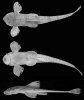 Rineloricaria
stellata Rineloricaria
stellata Dorsal, ventral & lateral view |
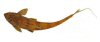 Rineloricaria
stellata Rineloricaria
stellata Dorsal view |
If you would like to contribute to the monthly factsheets with an article, information or photos, please e-mail me. You will of course be credited for your work.

If you would like to donate any denomination of monies to the site just click the above link button. All proceeds will go to running the site and hopefully to keep it going for a few years yet.

