SCOTCAT.COM
your internet guide to all things catfish
Malapterurus barbatus Norris, 2002 |
Image contributors to this species: |
Allan James (1 Stamp) Christian Fry (1) |
ScotCat Sources: |
|
|

Other Sources: |
|


Relevant Information: |
Description: Anal spines: 0; Anal soft rays: 8 – 9; Vertebrae: 38 – 41. Diagnosis: tooth patches broad; 8-9 anal-fin rays; 0-4 gill-rakers on upper branch of first arch; 3 unbranched ventral caudal- fin rays; 38-41 vertebrae; caudal fin with prominent pale basal crescent, even in adults; body typically grey; grey flank pigment carried onto the lower lip, mental barbels and, in adults, the underside of the head. Body and head moderately depressed; eyes placed laterally; snout blunt; lips thick; lower jaw prominent, particularly in juveniles; 16-18 abdominal vertebrae; 22-24 caudal vertebrae; 20 caudal fin rays (usual arrangement ii-7-8- iii; iii-6-8-iii in some juveniles; ii-7-9-ii in one adult). Colouration: head and body bicolored in shades of grey; dorsum and flank well-marked with spots, most an eye diameter or smaller, with similar spots scattered across venter; dorsal surface of pectoral fin dusky in adults, pelvic fin generally unmarked; underside of head (from snout to level of pectoral fin) bears a distinct scattering of dark grey pigment (matching dorsal pigment in shade), lower lip and barbels similarly marked; pigmentation of ventral surface of head well- developed in young and adults and starts forming at about 70-80mm SL; anal fin with faint dusky bar near its distal margin in young and juveniles, which is not apparent in larger specimens in which the anal fin is generally unpigmented and may bear scattered small spots or a slight shading of grey pigment; caudal fin in adults roughly the same shade as flank, with a pale distal margin and a faint pale basal crescent; caudal fin in young and juveniles with a dark bar set off by the pale distal margin and a wide, pale basal crescent; caudal saddle and bar pattern well-developed in specimens up to about 70mm SL; caudal bar dark and mostly on the caudal peduncle; saddle extending about 3/4 of the way down the flank, generally not as dark nor as well-defined as the caudal bar. Etymology: The name is derived from the Latin barbatus, meaning bearded. This is in reference to the dusky underside of the head typical of this species. |
Common Name: |
Liberian Electric Catfish |
Synonyms: |
Silurus electricus |
Family: |
Malapteruridae |
Distribution: |
Africa: From the Kolente River (Sierra Leone/Guinea) to the Borlor River (Liberia). |
Size: |
21.5cm. (8½ins) |
Temp: |
23-30°C (73-87°F) |
p.H. |
|
6.5-7.2. |
Reference: |
Norris, S.M., 2002. A revision of the African electric catfishes, family Malapteruridae (Teleostei, Siluriformes), with erection of a new genus and descriptions of fourteen new species, and an annotated bibliography. Ann. Mus. R. Afr. Centr., Sci. Zool., 289:155 p. |

Family: Malapteruridae Back to Ident-A-Cat Click on Thumbnails |
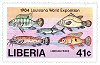 Malapterurus barbatus
 Stamp |
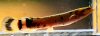 Malapterurus
barbatus Malapterurus
barbatus |
If you would like to contribute to the monthly factsheets with an article, information or photos, please e-mail me. You will of course be credited for your work.

If you would like to donate any denomination of monies to the site just click the above link button. All proceeds will go to running the site and hopefully to keep it going for a few years yet.

