SCOTCAT.COM
your internet guide to all things catfish
Chiloglanis somereni Whitehead, 1958 |
Image contributors to this species: |
ScotCat Sources: |
|

Other Sources: |
|
|


Relevant Information: |
This genus is the African equivalent of the sucker mouth catfishes of South America and has a sucking disc that helps them to cling on to rocks in fast flowing rivers. Not an easy genus to identify to species. Habitat: Prefers fast-flowing upper reaches of rivers with rocks and small boulders. Also found in residual pools. Reproduction: Oviparous. Probably spawns more than once per year. Aquarium Care: Good oxygenated water from a power filter. Sand or gravel substrate with smooth rocks or pebbles. Their dorsal and pectoral fins are sharp and can cause wounds if not handled carefully. Sexual Differences: Usually in the form of a different shaped caudal fin. Diet: Mouth and dentition suggest that it is a bottom feeder and algal grazer. In the aquarium feed algae, fly larvae foods, bloodworm, and flake food. Etymology: The specific name somereni: In honour of Vernon Donald van Someren (1915–1962), zoologist and Senior Research Officer, Ministry of Forest Development, Game and Fisheries, Nairobi, Kenya, where Whitehead was affiliated at the time. |
Common Name: |
Someren's Suckermouth |
Synonyms: |
None |
Family: |
Mochokidae |
Distribution: |
Africa: Westward flowing Kenya rivers affluent to Lake Victoria. Type locality: Waroya River, Nyanza Province, Kenya; at 34º30'E, 0º10'N. |
Size: |
10.0cm. (4ins) |
Temp: |
20-24°C (67-75°F) |
p.H. |
|
6.5-7.2. |
IUCN Red List |
Chiloglanis somereni is known from the eastern Lake Victoria affluents in Tanzania and Kenya, and from the Malagarazi River basin in Tanzania. No major, widespread threats have been identified. The Someren's Suckermouth is therefore listed as Least Concern (IUCN 2016). |
Reference: |
Ferraris, C.J. Jr.,
2007. Checklist of catfishes, recent and fossil (Osteichthyes:
Siluriformes), and catalogue of siluriform primary
types. Zootaxa 1418:1-628. |

Family: Mochokidae Back to Ident-A-Cat Click on Thumbnails |
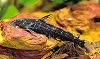 Chiloglanis
somereni Chiloglanis
somereni |
 Chiloglanis
somereni Chiloglanis
somereni |
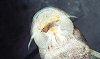 Chiloglanis
somereni Chiloglanis
somereni Mouth view |
 Chiloglanis
somereni Chiloglanis
somereni |
If you would like to contribute to the monthly factsheets with an article, information or photos, please e-mail me. You will of course be credited for your work.

If you would like to donate any denomination of monies to the site just click the above link button. All proceeds will go to running the site and hopefully to keep it going for a few years yet.

