SCOTCAT.COM
your internet guide to all things catfish
Synodontis serpentis Whitehead, 1962 |
Image contributors to this species: |
Hippocampus Bildarchiv (1) Peter Hardy (2) Rehoboth Aquatics, USA (2) |
ScotCat Sources: |
|

Other Sources: |
|
|


Relevant Information: |
Noted for the two pale bands on the body, just before and after the adipose fin and the marbled pattern. Not imported very often. Habitat: Inhabits small streams, main rivers and flooded pools. Extremely abundant in ox-bow lakes and river cut-offs in the Lower Tana River. Reproduction: Breeding occurs shortly after floods, when ripe fish enter small streams leading to floodwater pools, where they breed; this migration is rather sudden, adult fish migrate in large schools upstream over a period of less than a week (3 to 4 days); one or two additional smaller migrations may occur after the main peak; the stimulus triggering this migration is probably closely connected with rainfall. Aquarium Care: As for per Synodontis species. Diet: Will eat most prepared foods and also likes a vegetable addition to the diet. Etymology: The specific name serpentis: Genitive singular of serpens (L.), snake, allusion not explained, perhaps referring to marbled pattern on caudal peduncle of juveniles, which resembles the marbled pattern seen on many constrictors. |
Common Name: |
Tana squeaker |
Synonyms: |
None |
Family: |
Mochokidae |
Distribution: |
Africa: Athi and Tana River basins (Kenya). Type locality: Athi River at Jilore, thirty miles from river mouth, Kenya. |
Size: |
10.0cm. (4ins) |
Temp: |
23-26°C (73-79°F) |
p.H. |
|
6.5-7.2. |
IUCN Red List |
This species is endemic to Kenya occurring in lower Tana and Athi rivers. It has an extent of occurrence (EOO) of 67,514 km2 and an area of occupancy (AOO) of 53,476 km2. It occurs in 5–10 locations, which are facing a continuing decline in quality of habitat due water abstraction, overgrazing, riparian farming, as well as climate change (sea level rise and drought). There is no conservation actions in place for this species. However, some parts of both rivers pass through protected areas (Tana River Primate Reserve, lower Tana River Ramsar site and Tsavo National Park) enhancing the conservation of the species. Further research is needed to understand population size, trend, life history and ecology of the species. As such, the species is assessed as Least Concern (IUCN 2023). |
Reference: |
Bruton,
M., Merron, G., Skelton, P., Fishes
of the Okavango Delta & Chobe River, Botswana.
Struik Nature, 2018. |

Family: Mochokidae Back to Ident-A-Cat Click on Thumbnails |
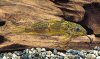 Synodontis
serpentis Synodontis
serpentis |
 Synodontis
serpentis Synodontis
serpentisTana River, Kenya |
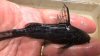 Synodontis
serpentis Synodontis
serpentisTana River, Kenya |
 Synodontis
serpentis Synodontis
serpentis |
 Synodontis
serpentis Synodontis
serpentis |
If you would like to contribute to the monthly factsheets with an article, information or photos, please e-mail me. You will of course be credited for your work.

If you would like to donate any denomination of monies to the site just click the above link button. All proceeds will go to running the site and hopefully to keep it going for a few years yet.

