SCOTCAT.COM
your internet guide to all things catfish
Nematogenys inermis (Guichenot, 1848) |
Image contributors to this species: |
Iván Valdebenito Isler (2) Original source (1) labrigo (1) J. H. Richard (2) |
ScotCat Sources: |
|


Other Sources: |
|
|


Relevant Information: |
Contains only this single genus, Nematogenys, which contains a single species, N. inermis. Description: N. inermis has no adipose fin and and the caudal fin is short and rounded. Habitat: The genus is endemic to some rivers in Chile. The common name for this species is "Mountain Catfish". Previously in the Trichomycteridae family and is very rare in the aquatic hobby. There was a fossil which was found and described from the Miocene, continental fluviolacustrine deposits of the upper Cura–Mallín Formation (37–39°S), Chile (Azpelicueta & Rubilar, 1997). This species was named as Nematogenys cuivi. Etymology: The specific name inermis: Latin for unarmed, referring to absence of opercular spines, which distinguished it from presumed congeners in Trichomycterus (Trichomycteridae) at time of description. Remarks: There is not much information on keeping this species in the aquarium as this species has never been exported, due to their rarity. |
Common Name: |
Mountain Catfish |
Synonyms: |
Trichomycterus inermis, Nematogenys nigricans, Nematogenys pallidus |
Family: |
Nematogenyidae |
Distribution: |
South America: Isolated localities in Concepción, Rancagua and Angol, Chile. Formerly widespread throughout much of Central Chile. Type locality: Chile. |
Size: |
24.0cm (9¾ins) |
Temp: |
18-24°C (63-75°F) |
p.H. |
|
6.7-7.2. |
IUCN Red List |
The species is presently considered extinct in almost all Chilean rivers with the exception of some relatively undisturbed coastal catchments (Arratia and Chang 1975, Habit et al. 2007, Vila and Habit 2015). Furthermore, various publications report that the species has undergone severe declines in abundances across its distribution range and only few remnant subpopulations exist (Arratia and Chang 1975, Arratia et al. 1981, Habit and Victoriano 2005, Vila and Habit 2015). The subpopulations seem to continue to decline. For example, its probable extinction has been recently documented in the middle course of the Biobío River (Habit et al. 2006). Furthermore, it was reported in Laguna Grande San Pedro in the Biobío Region (36° Latitude South) up to the nineties (Scasso and Campos 1998), but recent intensive monthly sampling that employed a variety of fishing techniques between March 2018 and February 2019 did not capture a single individual of the species in this location (Machino 2020). These changes may be attributed to water quality and habitat deterioration within its distribution range in recent decades (Habit et al. 2019). Habitat alteration due to water extraction, contamination and river regulation that have affected the abundance and distribution of the species are still in place and are expected to intensify in coming decades (Habit et al. 2006, 2019; Vila and Habit 2015; Díaz et al. 2021). Effects of these direct stressors will interact with projected climate change, as the species is endemic to the central regions of Chile that are highly vulnerable to climate (Araya-Osses et al. 2020, Habit et al. 2019). A population decline of 90% is suspected over the past 12 years. Therefore, this species is assessed as Critically Endangered. Urgent conservation measures are needed to slow down the decline of the populations of this species (IUCN 2023). |
Reference: |
Burgess, W.E.
1989 An atlas of freshwater and marine catfishes.
A preliminary survey of the Siluriformes. T.F.H. Publications,
Inc., Neptune City, New Jersey (USA). 784 p. |

Family: Nematogenyidae Back to Ident-A-Cat Click on Thumbnails |
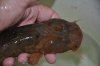 Nematogenys
inermis Nematogenys
inermisDorsal head view |
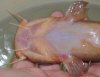 Nematogenys
inermis Nematogenys
inermisVentral mouth view |
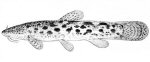 Nematogenys
inermis Nematogenys
inermisLine drawing |
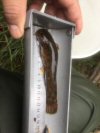 Nematogenys
inermis Nematogenys
inermisCalle Gerona 2092, Chillán, Bío-Bío, CL |
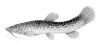 Nematogenys
inermis Nematogenys
inermisLine drawing |
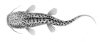 Nematogenys
inermis Nematogenys
inermisDorsal view-Line drawing |
If you would like to contribute to the monthly factsheets with an article, information or photos, please e-mail me. You will of course be credited for your work.

If you would like to donate any denomination of monies to the site just click the above link button. All proceeds will go to running the site and hopefully to keep it going for a few years yet.

