SCOTCAT.COM
your internet guide to all things catfish
Neosilurus brevidorsalis (Günther, 1867) |
Image contributors to this species: |
Allan James (3) Johnny Jensen's Photographic Library (2) Drake Shaw (1) |
ScotCat Sources: |
|
|


Other Sources: |
|


Relevant Information: |
Description: Dorsal spines (total): 1; Dorsal soft rays (total): 4-5; Anal spines: 0; Anal soft rays: 56 - 93. Habitat: Occurs in lakes, swamps and rivers, including turbid backwaters and clear, flowing tributaries). Inhabits bottom of warm, clear, flowing streams; also lives in billabongs and flooded lagoons. Reproduction: Reaches sexual maturity at about 12 centimeters. Aquarium Care: Better suited to larger tanks of 4ft (120cm) or over with rocks and plants provided for cover. This genera are easily spooked in the aquarium but N. brevidorsalis seems to be a suitable candinate for larger aquariums. Best kept in small groups of 4-6 individuals. The pectoral and dorsal spines, as is the norm in this genera, are venomous so handle with care. In my personal experience they are well suited to larger tanks with other same sized or larger inhabitants and will hold their own in that company and are generally peaceful with other placid species. Diet: Feeds on insects, prawns, mollusks and small crayfish. In the aquarium, snails, insects, prawns, earthworms and other small crustaceans and will take most aquarium foods. Etymology: The specific name brevidorsalis: With short dorsal. Remarks: Uncommon in Australia as it is found only in the far north at the tip of the Cape York peninsula in Queensland. It is more widespread in southern New Guinea. The first three specimens in the thumbnail gallery were captured in Papua New Guinea (Timika). |
Common Name: |
Shortfin tandan, Short-finned Catfish |
Synonyms: |
Copidoglanis brevidorsalis, Anyperistius perugiae, Neosilurus bartoni |
Family: |
Plotosidae |
Distribution: |
Asia & Oceania: Northern Australia at Cape York Peninsula and central-southern New Guinea. Type locality: Nicol Bay, Cape York, Queensland, Australia. Inawe, St. Joseph River, New Guinea. Sogeri, New Guinea. |
Size: |
15-20.0cm. (6-8ins) |
Temp: |
22-28°C (71-83°F) |
p.H. |
|
6.0-8.0. |
IUCN Red List |
Listed as Least Concern because it is widespread, common, and there are no major threats, (IUCN 2019). |
Reference: |
|
Allen, G.R., S.H. Midgley
and M. Allen, 2002. Field guide to the freshwater
fishes of Australia. Western Australian Museum, Perth,
Western Australia. 394 p. |

Family: Plotosidae Back to Ident-A-Cat Click on Thumbnails |
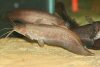 Neosilurus brevidorsalis |
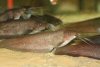 Neosilurus
brevidorsalis |
 Neosilurus
brevidorsalis Head view |
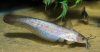 Neosilurus
brevidorsalis |
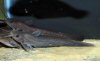 Neosilurus
brevidorsalis |
 Neosilurus
brevidorsalis |
If you would like to contribute to the monthly factsheets with an article, information or photos, please e-mail me. You will of course be credited for your work.

If you would like to donate any denomination of monies to the site just click the above link button. All proceeds will go to running the site and hopefully to keep it going for a few years yet.

