SCOTCAT.COM
your internet guide to all things catfish
Wallagonia micropogon (Ng, 2004) |
Image contributors to this species: |
Nonn Panitvong (2) Fishes of Mainland Southeast Asia (2) |
ScotCat Sources: |
|
|

Other Sources: |
|


Relevant Information: |
Description: Wallagonia micropogon is distinguished by the following characters: 14-16 branchiostegal rays; 14-16 gill rakers on first branchial arch; 68-73 anal fin rays; small gape extending to anterior margin of eye; pelvic fin length 8.9-10.6% SL; small eye, 8.7-10.1% HL; maxillary barbels reaching to middle of pectoral-fin base; rounded pectoral fin in which the fourth branched pectoral ray is the longest; pectoral spine length 14.3-16.7% SL; dark colored body with a few pale spots forming a mottled pattern; and 63-65 vertebrae. Habitat: Enters the flooded forest during high water and stays near the edge of the forest during low water. Migrates into smaller streams to spawn. Reproduction: Oviparous, distinct pairing possibly like other members of the same family. Aquarium Care: Only juveniles can be kept in aquaria and fed on tablet food, beef heart and similar foods. Adult fish are not deemed suitable for aquarium keeping due to the size, verocity and its feeding needs for living fish. Diet: Adults feed strictly on fishes. Etymology: The specific name micropogon: micro-, from mikrós, small; põgon, beard, referring to its short maxillary barbels. Remarks: Cited in Fishbase and other internet sources as Wallago but in Eschmeyer's Catalog of Fishes the current status is Wallagonia micropogon (Ng, 2004) (2018). The diferences between Wallago and Wallagonia are complex and are due to the different bone structures. Wallagonia was placed by Myers (1948) and nearly all subsequent authors as a junior synonym of Wallago, but it is was later recognised as a distinct genus by Roberts, T. R. 2014. |
Common Name: |
None |
Synonyms: |
None |
Family: |
Siluridae |
Distribution: |
Asia: Mekong River drainage between Dau Tieng in southern Viet Nam and Luang Prabang in northern Laos; also middle Chao Phraya River drainage in Thailand. |
Size: |
154.0cm. (5ft 1½ins) |
Temp: |
22-26°C (71-79°F) |
p.H. |
|
6.0-7.0. |
IUCN Red List |
Recorded from the Mekong River drainage between southern Viet Nam and Luang Prabang in northern Lao PDR, as well as in the middle Chao Phraya River drainage in Thailand. There is little information available on the species, it is considered vulnerable to loss of habitat, but is assessed as Data Deficient at present, but does need updating, (IUCN 2011). |
Reference: |
Allen, D.J.
2011. Wallago micropogon. The IUCN Red List
of Threatened Species 2011. |

Family: Siluridae Back to Ident-A-Cat Click on Thumbnails |
 Wallagonia micropogon |
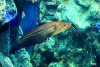 Wallagonia
micropogon |
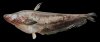 Wallagonia
micropogon |
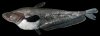 Wallagonia
micropogon |
If you would like to contribute to the monthly factsheets with an article, information or photos, please e-mail me. You will of course be credited for your work.

If you would like to donate any denomination of monies to the site just click the above link button. All proceeds will go to running the site and hopefully to keep it going for a few years yet.

