SCOTCAT.COM
your internet guide to all things catfish
Aspredo aspredo (Linnaeus, 1758) |
Image contributors to this species: |
Kiruya Momochi (3) RNN Grand-Connétable (1) |
ScotCat Sources: |
|
|

Other Sources: |
|


Relevant Information: |
Habitat: Benthic fish occurring on sandy-muddy bottoms of brackish waters and coastal rivers. Found on soft bottoms of shallow turbid water near river mouths. Aquarium Care: Prefers a secluded tank with non- aggressive tank mates and a sand substrate. Reproduction: The species has a peculiar mode of egg incubation wherein the female banjo catfish carries the eggs firmly attached to the underside of the body. This seems to be an adaptation to facilitate the oxygenation of the eggs in muddy environments. Reproduction probably occurs during the earlier part of the year. Diet: Small invertebrates and tubifex. Tablet foods are also taken. Etymology: The genus name Asprdo: presumably tautonymous with Silurus aspredo (Scopoli [ex Gronow] did not indicate species), Latin for roughness, presumably referring to its tuberculate skin. The specific name aspredo: Latin for roughness, presumably referring to its tuberculate skin. |
Common Name: |
Eel-Tailed Banjo Catfish |
Synonyms: |
Aspredo batrachus, Aspredo octocirrus, Aspredo sicuephorus, Aspredo sicyephorus, Platystacus laevis, Silurus aspredo |
Family: |
Aspredinidae |
Distribution: |
South America: Lower portions of coastal rivers (Brazil, French Guiana, Guyana, Suriname, Trinidad and Tobago, and Venezuela). Type locality: In Americae fluviis. |
Size: |
38.0cm. (15¼ins) |
Temp: |
22-24°C (71-75°f.) |
p.H. |
|
6.0-8.0. |
IUCN Red List |
Despite limited information available on this species, it is assessed as Least Concern due to its wide range (IUCN 2021). |
Reference: |
Cervigón, F.,
R. Cipriani, W. Fischer, L. Garibaldi, M. Hendrickx,
A.J. Lemus, R. Márquez, J.M. Poutiers, G. Robaina
and B. Rodriguez, 1992. Fichas FAO de identificación
de especies para los fines de la pesca. Guía
de campo de las especies comerciales marinas y de
aquas salobres de la costa septentrional de Sur América.
FAO, Rome. 513 p. Preparado con el financiamento de
la Comisión de Comunidades Europeas y de NORAD. |

Family: Aspredinidae Back to Ident-A-Cat Click on Thumbnails |
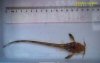 Aspredo
aspredo Aspredo
aspredoDorsal view |
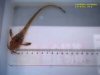 Aspredo
aspredo Aspredo
aspredoDorsal view |
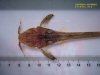 Aspredo
aspredo Aspredo
aspredoDorsal head view |
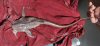 Aspredo aspredo
Dorsal view-Rémire-Montjoly, commune in French Guiana |
If you would like to contribute to the monthly factsheets with an article, information or photos, please e-mail me. You will of course be credited for your work.

If you would like to donate any denomination of monies to the site just click the above link button. All proceeds will go to running the site and hopefully to keep it going for a few years yet.

