SCOTCAT.COM
your internet guide to all things catfish
Astroblepus latidens Eigenmann, 1918 |
Image contributors to this species: |
ScotCat Sources: |
|

Other Sources: |
|


Relevant Information: |
Astroblepids are closely related to the Loricariids, and in fact one genus of fish (Lithogenes Eigenman, 1909) seems intermediate between the two families, having the shape and form of an Astroblepid, but some plates on the body and other morphological characters closer to Loricariids. At the time of writing, Lithogenes is currently placed in Loricariidae. Habitat: Fishes of the family Astroblepidae are found in freshwaters streams (between 200 to 13,400 feet above sea level) of the tropical Andes from Panama to Bolivia, and occur in both the western Pacific and eastern Amazonian slope drainage systems in South and Central America. Aquarium Care: Not an easy family of catfishes to keep so they would have to have a large tank with rocks and some appropriate vegetation. The water would need to be fast flowing and provided with extra oxygen via an air tube fed into the powerhead flow. The tank should be set up with rocks so as to provide an area where the water current will be slower. Diet: Invertebrates, insect larvae, spirulina tablets or paste, algae based foods and live bloodworm would probably be the staple diet but you may wish to try glassworm and blackworm (although these won’t tend to stay on the substrate unless the current takes them there). Etymology: The specific name latidens: latus, wide; dens, teeth, referring to wider teeth on outer row of premaxillary compared to the similar A. trifasciatus. Remarks: Astroblepus latidens has a restricted range (extent of occurrence (EOO) = 17,000 km²). It is affected by a continuing decline in habitat quality due to deforestation for large-scale agriculture in one of the locations, while mining and road construction are increasing sedimentation and polluting the water in other parts of its range. There are certainly fewer than ten locations. Hence, the species qualifies for listing as Vulnerable (IUCN 2016). |
Common Name: |
Piperel Climbing Catfish |
Synonyms: |
Astroblepus latindens |
Family: |
Astroblepidae |
Distribution: |
South America: Upper Meta River basin, Colombia and Suarez River basin, Colombia. Type locality: Piperel, Colombia. |
Size: |
8.0cm (3¼ins) |
Temp: |
15-20°c (57-67°f.) |
p.H. |
|
- |
Reference: |
Burgess,
W.E., 1989. An atlas of freshwater and marine
catfishes. A preliminary survey of the Siluriformes.
T.F.H. Publications, Inc., Neptune City, New Jersey
(USA). 784 p. |

Family: Astroblepidae Back to Ident-A-Cat Click on Thumbnails |
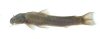 Astroblepus
latidens Astroblepus
latidens |
If you would like to contribute to the monthly factsheets with an article, information or photos, please e-mail me. You will of course be credited for your work.

If you would like to donate any denomination of monies to the site just click the above link button. All proceeds will go to running the site and hopefully to keep it going for a few years yet.

