SCOTCAT.COM
your internet guide to all things catfish
Astroblepus quispei Ardila Rodríguez, 2012 |
Image contributors to this species: |
ScotCat Sources: |
|

Other Sources: |
|


Relevant Information: |
Astroblepids are closely related to the Loricariids, and in fact one genus of fish (Lithogenes Eigenman, 1909) seems intermediate between the two families, having the shape and form of an Astroblepid, but some plates on the body and other morphological characters closer to Loricariids. At the time of writing, Lithogenes is currently placed in Loricariidae. Description: Astroblepus quispei is distinguished from other congeners by the following characters: maxillary wattle doesn't reach beyond the oral disk; first pectoral radius is shorter than head longitude and has 10 - 11 soft branching radii, 7 of them associated to the third radial; first radius of the pelvic doesn't go beyond the anus; pre-maxillary with two and a half internal rows of bicuspid teeth; the outermost row with 10 conic teeth; first simple radii of caudal fin with extensions; 23 free vertebrae, the fifth cerato-branchial bone with 5 teeth in the anterior region. Body shape (shape guide): elongated. Habitat: Fishes of the family Astroblepidae are found in freshwaters streams (between 200 to 13,400 feet above sea level) of the tropical Andes from Panama to Bolivia, and occur in both the western Pacific and eastern Amazonian slope drainage systems in South and Central America. Aquarium Care: Not an easy family of catfishes to keep so they would have to have a large tank with rocks and some appropriate vegetation. The water would need to be fast flowing and provided with extra oxygen via an air tube fed into the powerhead flow. The tank should be set up with rocks so as to provide an area where the water current will be slower. Diet: Invertebrates, insect larvae, spirulina tablets or paste, algae based foods and live bloodworm would probably be the staple diet but you may wish to try glassworm and blackworm (although these won’t tend to stay on the substrate unless the current takes them there). Etymology: The specific name quispei: Roberto Quispe is an ichthyologist at Museo de Historia Natural de la Universidad Nacional Mayor de San Marcos, Peru, where he was awarded a bachelor’s degree (1991) and a master’s (2009). |
Common Name: |
None |
Synonyms: |
None |
Family: |
Astroblepidae |
Distribution: |
South America: Andes, Peru. |
Size: |
5.0cm (2ins) |
Temp: |
15-20°c (57-67°f.) |
p.H. |
|
- |
IUCN Red List |
Not Evaluated. |
Reference: |
Ardila
Rodriguez, C.A., 2013. Astroblepus hidalgoi
- A. floridaensis A. huallagaensis
y A. cajamarcaensis Cuatro nueva especies de
los Andes del Perú. Barranquilla, Departamento
del Atlántico, 25 p. |

Family: Astroblepidae Back to Ident-A-Cat Click on Thumbnails |
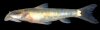 Astroblepus
quispei Astroblepus
quispei |
If you would like to contribute to the monthly factsheets with an article, information or photos, please e-mail me. You will of course be credited for your work.

If you would like to donate any denomination of monies to the site just click the above link button. All proceeds will go to running the site and hopefully to keep it going for a few years yet.

