SCOTCAT.COM
your internet guide to all things catfish
Tachysurus sinensis Lacepède, 1803 |
Image contributors to this species: |
Chinese Academy of Fishery Sciences (1) Zhou Hang (2) Karl-Heinz Dau (1 Stamp) Johnny Jensen's Photographic Library (3) |
ScotCat Sources: |
|


Other Sources: |
|
|


Relevant Information: |
Description: Dorsal spines (total): 2; Dorsal soft rays (total): 7; Anal soft rays: 19 - 20. Habitat: Occurs mainly in river channels and lakes. Colouration: Has an unique colour pattern of brown to dark brown mid-lateral and mid-dorsal stripes on yellow background. Reproduction: Oviparous. Eggs are guarded by the males. Aquarium Care: Primarily a cool water catfish so placing the tank in a centrally heated house would suffice. Needs a large tank as they grow fast and they will squabble with con specifics if kept in too small a tank. Create hiding places with rocks and bogwood with the tank densely planted and with floating plants as part of the setup. Diet: Feeds on the bottom on insects (particularly on trichopterans and chironomids), mollusks, occasionally on fishes. In the aquarium it will accept most prepared foods such as flake, tablets, live and frozen. Etymology: The genus name of Tachysurus: tachys, swift; oura, tail, referring to the presumed agility of T. sinensis based on its “long and nimble” tail (translation). The specific name of sinensis: ensis, Latin suffix denoting place: Sinica (China), a Chinese catfish described from a Chinese painting. Remarks: At the moment (2024) in Eshmeyers Catalog of Fishes, the current status of T. fulvidraco is that it is a synonym of Tachysurus sinensis Lacepède 1803. |
Common Name: |
Tawny Dragon catfish |
Synonyms: |
Arius sinensis, Bagrus calvarius, Macrones fulvidraco, Pelteobagrus fulvidraco, Pelteobagrus wittenbergii, Pelteobagrus wittenburgii, Pimelodus fulvidraco, Pseudobagrus fulvidraco, Pseudobagrus wittenburgii, Silurus calvarius, Tachysurus wittenburgii, Tachysurus fulvidraco. |
Family: |
Bagridae |
Distribution: |
Asia: Widely distributed in the plain part of the rivers of East Asia, from the Amur River, Russia, to Viet Nam. This species occurs within Russia, China, Viet Nam and the Korean Peninsula. Type locality: Huairou Reservoir, about 2 kilometers northeast of observatory, 40°19'00"N, 116°37'31"E, Huairou County, Beiging, China. |
Size: |
32.0cm (14ins) |
Temp: |
16-25°C (59-77°F) |
p.H. |
|
6.0-7.0. |
IUCN Red List |
Tachysurus sinensis is widely distributed in the plain part of the rivers of East Asia, from the Amur River, Russia, to Viet Nam. This species occurs within Russia, China, Viet Nam and the Korean Peninsula. This species is widespread and while it is possibly declining in parts of its range from potential fishing over exploitation, it is not thought that any global population decline is likely to meet (or be close to meeting) the threshold for Vulnerable, and therefore the species is assessed as Least Concern, (IUCN 2022). |
Reference: |
Baensch, H.A. and R.
Riehl 1991 Aquarien atlas. Bd. 3. Melle:
Mergus, Verlag für Natur- und Heimtierkunde,
Germany. 1104 p. |

Family: Bagridae Back to Ident-A-Cat Click on Thumbnails |
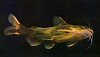 Tachysurus
sinensis Tachysurus
sinensis |
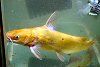 Tachysurus
sinensis Tachysurus
sinensis"Gold" |
 Tachysurus
sinensis Tachysurus
sinensis |
 Tachysurus
sinensis Tachysurus
sinensisStamp |
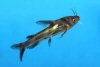 Tachysurus
sinensis Tachysurus
sinensis |
 Tachysurus
sinensis Tachysurus
sinensis |
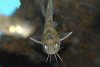 Tachysurus
sinensis Tachysurus
sinensisHead view |
If you would like to contribute to the monthly factsheets with an article, information or photos, please e-mail me. You will of course be credited for your work.

If you would like to donate any denomination of monies to the site just click the above link button. All proceeds will go to running the site and hopefully to keep it going for a few years yet.

