SCOTCAT.COM
your internet guide to all things catfish
Chaca chaca (Hamilton, 1822) |
Image contributors to this species: |
Allan James (1) Klauss Dreyman (1) Chris Ralph (4) Steven Grant (3) Andrew Rao (5) |
ScotCat Sources: |
|


Other Sources: |
|


Relevant Information: |
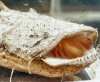
Description: Chaca bankenensis seems to be a little bit darker in colouration than Chaca chaca and has one less pectoral ray, 1/4 to 1/5 of C. chaca. You can differentiate the difference between Chaca burmensis and Chaca chaca by the number and the size of the cirri along the inner edge of the lower lip, C. chaca has 14+ and tends to be relatively longer and/or thicker. Chaca burmensis usually numbers around 10 or 11 small cirri, and they don’t tend to have them near the corners of the mouth. Inhabits rivers, beels, canals and ponds and prefers soft substrates where it lies concealed in the soft mire of the river bed. It depends upon this concealment for protection and will not even move when it is touched lightly. Lies quietly on the bottom until some prey comes along. Apparently a worm-like appendix at the fringe of the mouth is used to attract prey. Fairly common in catches, but is not eaten perhaps due to its ugly appearance. Aquarium Care: This catfish does not do a lot apart from sitting very still buried in the substrate waiting for its next meal and then engulfing its prey by opening its very large mouth and basically creates a strong vacuum, whereas the unlucky victim is drawn in to the gaping hole!. It is a very hardy aquarium fish that will do very well on a sand/leaf substrate where it can bury itself with just its head showing and also a landscape of rocks and caves. It is not your average community tank fish so I would choose my tank mates carefully for fear of them getting eaten as they will consume fish half their size. Probably any species of the African Synodontis would do fine and for the upper layers you would do better with larger shoaling fish such as Congo tetras, or larger barbs i.e. Tinfoil Barbs. This would pre-empt a larger tank to house the larger barbs or characins. If you can make the space, a better idea would be a species tank with 3 to 4 individuals, as they seem to coincide peacefully with one another. Diet: A feeding of earthworms and other meaty foods such as feeder fish like young Tilapia sp. They are said also to take tablet food when fully acclimatised. Etymology: The genus and specific name chaca: Local Assamese name for this catfish in India. |
Common Name: |
Indian frog-mouth catfish |
Synonyms: |
Platystacus chaca |
Family: |
Chacidae |
Distribution: |
Asia: India, Bangladesh, Nepal, Malaya and Indonesia. Reported from Myanmar. |
Size: |
19.0cm. (7½ins) |
Temp: |
22-24°C (71-75°F) |
p.H. |
|
6.5-8.0. |
IUCN Red List |
Chaca chaca is widespread occurring in the Ganges-Brahmaputra river drainages. Although there have been indications of population declines in some parts of its range due to over-exploitation for the aquarium trade, it is not threatened in all of its range, hence it is at present assessed as Least Concern. However, monitoring and educational work within the ornamental fish trade is required. (needs updating IUCN 2010). |
Reference: |
Baensch,
H.A. and R. Riehl 1991 Aquarien atlas. Bd.
3. Melle: Mergus, Verlag für Natur- und Heimtierkunde,
Germany. 1104 p. |

Family: Chacidae Back to Ident-A-Cat Click on Thumbnails |
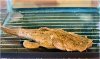 Chaca chaca
 |
 Chaca
chaca Chaca
chaca Showing the large mouth and the hooklets (cirri) on the bottom lip. |
 Chaca
chaca Chaca
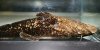
chaca |
 Chaca
chaca Chaca
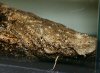
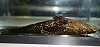
chaca Close up of head |
 Chaca
chaca Chaca
chaca |
 Chaca
chaca Chaca
chaca |
 Chaca
chaca Chaca
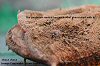
chaca Showing the posterior nostril with no barbel attached to it |
 Chaca
chaca Chaca
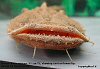
chaca Showingg cirri on lower lip |
 Chaca
chaca Chaca
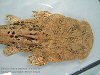
chaca Dorsal View |
 Chaca
chaca Chaca
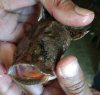
chacaMouth view |
 Chaca
chaca Chaca
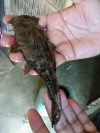
chaca Dorsal view |
 Chaca
chaca Chaca
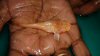
chacaAlbino |
 Chaca
chaca Chaca
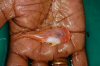
chacaAlbino-ventral view |
 Chaca
chaca Chaca
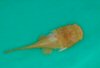
chacaAlbino-dorsal view |
If you would like to contribute to the monthly factsheets with an article, information or photos, please e-mail me. You will of course be credited for your work.

If you would like to donate any denomination of monies to the site just click the above link button. All proceeds will go to running the site and hopefully to keep it going for a few years yet.

