SCOTCAT.COM
your internet guide to all things catfish
Channallabes apus (Günther, 1873) |
Image contributors to this species: |
Hippocampus Bildarchiv (3) Ben Lee (5) Christian Bode (2) Thomas Kobe (1) Cheilinus Aquarium Photography (1) |
ScotCat Sources: |
|


Other Sources: |
|


Relevant Information: |
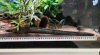
Aquarium Care: Nocturnal and will need hiding places in the aquarium. Choose co-habitants carefully as they can be predatory. This is a nocturnal species and ideally should be housed in a dimly lit tank no less than 4ft long with hiding places and a soft substrate such as sand or small rounded gravel, as it likes to burrow into the substrate, so there should be no sharp edges there to scar its soft body parts. The thumbnail image captioned "The perfect setup" shows the ideal conditions for the "Eel Catfish". They do like to socialise with their own so three or four specimens would get on well together. Diet: Tablet food, and any larger live foods such as earth worms, and frozen foods such as bloodworm. Etymology: The specific name apus: From the Greek; a- meaning without, and pous, meaning foot; in reference to the lack of any pelvic fins. |
Common Name: |
Eel Catfish |
Synonyms: |
Gymnallabes apus |
Family: |
Clariidae |
Distribution: |
Africa: Angola to Congo River Basin. Type locality: Interior of Ambriz, Angola. |
Size: |
30.5cm. (12¼ins) |
Temp: |
|
22-25°C (71-77°F) |
p.H. |
|
6.5-7.8. |
IUCN Red List |
This species has a wide distribution throught the Congo region, with no known major widespread threats. It is therefore listed as Least Concern. It has also been assessed regionally as Least Concern for central Africa. In southern Africa it is known from two catchments but thought to have a larger distribution. More comprehensive surveys required to confirm the true extent of its distribution, and it has therefore regionally been assessed as Data Deficient (Needs updating IUCN 2010). |
Reference: |
Baensch, H.A. and R.
Riehl 1985 Aquarien
atlas. Band 2. Mergus, Verlag für Natur- und
Heimtierkunde GmbH, Melle, Germany. 1216 p.
|

Family: Clariidae Back to Ident-A-Cat Click on Thumbnails |
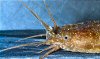 Channallabes
apus Channallabes
apusHead view |
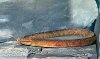 Channallabes
apus Channallabes
apus |
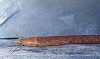 Channallabes
apus Channallabes
apus |
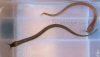 Channallabes
apus Channallabes
apus |
 Channallabes
apus Channallabes
apus |
 Channallabes
apus Channallabes
apus |
 Channallabes
apus Channallabes
apusClose up of head |
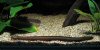 Channallabes
apus Channallabes
apusThe perfect setup |
 Channallabes
apus Channallabes
apus |
 Channallabes
apus Channallabes
apus |
 Channallabes
apus Channallabes
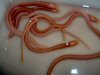
apusRed colour form from cave system |
 Channallabes
apus
Channallabes
apus |
If you would like to contribute to the monthly factsheets with an article, information or photos, please e-mail me. You will of course be credited for your work.

If you would like to donate any denomination of monies to the site just click the above link button. All proceeds will go to running the site and hopefully to keep it going for a few years yet.

