SCOTCAT.COM
your internet guide to all things catfish
Chrysichthys johnelsi Daget, 1959 |
Image contributors to this species: |
Rob Palmer (1) |
ScotCat Sources: |
|

Other Sources: |
|


Relevant Information: |
Description: Dorsal spines (total): 2; Dorsal soft rays (total): 6; Anal spines: 0. Diagnosis: snout rectangular, neither rounded nor pointed, its length equal to mouth width; mouth very broad; premaxillary tooth plate broad (width 30-37% of head length); occipital process well developed, its width 57-87% (average = 70%) of its length. Habitat: This species is known from upper Guinea rivers including the Gambia, Geba, Taja, Moa, Mano, Loffa, St. Pauls, St. Johns, Nipoué and Tano. However, its presence in Bia and several basins of Guinea must still be proven and its presence in Tano confirmed by other specimens (Risch 2003). Colouration: The specimens from the Gambia are grey with a silvery sheen, but further south, particularly in Liberia and Sierra Leone, they become increasingly yellowish. (Seegers L. 2008). Diet: The diet of this species is insect larvae when young to a predator on fish when growing into adulthood. Etymology: The specific name johnelsi: In honour of Swedish zoologist and fisheries biologist Alf G. Johnels (1916–2010), Swedish Museum of Natural History, who observed and reported the first specimens in 1954. Remarks: This species is widespread in Upper Guinea rivers where it has no widespread major threats. It is therefore assessed as Least Concern (IUCN 2020). |
Common Name: |
None |
Synonyms: |
None |
Family: |
Claroteidae |
Distribution: |
Africa: Rivers of the upper Guinea region, including the Geba, Taja, Moa, Mano, Loffa, St. Pauls, St. Johns, Nipoué and Tano rivers. Type locality: Gambie à Bafoulabé (parc national du Niokolo-Koba). |
Size: |
33.0cm. (13¼ins) |
Temp: |
24-28°C (75-83°F) |
p.H. |
6.0-7.5. |
Reference: |
Diallo, I., Lalèyè,
P. & Bousso, T.
2020. Chrysichthys johnelsi. The IUCN Red List of
Threatened Species 2020. |

Family: Claroteidae Back to Ident-A-Cat Click on Thumbnails |
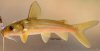 Chrysichthys
johnelsi Chrysichthys
johnelsiTonkolili, Sierra Leone |
If you would like to contribute to the monthly factsheets with an article, information or photos, please e-mail me. You will of course be credited for your work.

If you would like to donate any denomination of monies to the site just click the above link button. All proceeds will go to running the site and hopefully to keep it going for a few years yet.

