SCOTCAT.COM
your internet guide to all things catfish
Lophiobagrus aquilus Bailey & Stewart, 1984 |
Image contributors to this species: |
Eccles, D.H. Field guide to the freshwater fishes of Tanzania (1) |
ScotCat Sources: |
|

Other Sources: |
|


Relevant Information: |
Description: Nasal barbels only reaching front of eye. (middle of eye in L. cyclurus). Barbels not fringed. Cuadal fin truncate or emarginate. Habitat: Concealed mostly among rocks during daytime. Nocturnal habits prevail. Reproduction: Pairing comes near the gonadal maturation of the female, then separation occurs after spawning. Paired females showed higher GSI values and larger oocytes in their ovaries than solitary females. Oviparous. Previously thought that care of the eggs and young is done by mouthbrooding solitary males; new findings describe the genus Lophiobagrus to be hiding its brood in caves. Colouration: Fins dark. Etymology: The specific name aquilus: Latin for dark-coloured or swarthy, referring to its dark-coloured body. Remarks: Lophiobagrus aquilus has most recently been assessed for The IUCN Red List of Threatened Species in 2006 and is listed as Least Concern. |
Common Name: |
Tanganyika Bullhead-cat |
Synonyms: |
None |
Family: |
Claroteidae |
Distribution: |
Africa: Endemic to Lake Tanganyika. |
Size: |
8.0cm. T.L. (3¼ins) |
Temp: |
23-26°C (73-79°F) |
p.H. |
7.5-8.0. |
Reference: |
Eccles, D.H.
1992 FAO species identification sheets for fishery
purposes. Field guide to the freshwater fishes of
Tanzania. Prepared and published with the support
of the United Nations Development Programme (project
URT/87/016). FAO, Rome. 145 p. |

Family: Claroteidae Back to Ident-A-Cat Click on Thumbnails |
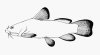 Lophiobagrus
aquilus Lophiobagrus
aquilus Line drawing |
If you would like to contribute to the monthly factsheets with an article, information or photos, please e-mail me. You will of course be credited for your work.

If you would like to donate any denomination of monies to the site just click the above link button. All proceeds will go to running the site and hopefully to keep it going for a few years yet.

