SCOTCAT.COM
your internet guide to all things catfish
Rhinodoras armbrusteri Sabaj Pérez, 2008 |
Image contributors to this species: |
|
Allan James (1) Mark Henry Sabaj (2) |
ScotCat Sources: |
|
|

Other Sources: |
|


Relevant Information: |
Description: Dorsal spines (total): 1; Dorsal soft rays (total): 6. Differs from all nominal species of the genus Rhinodoras by the following combination of characters: heavy pigmentation on ventral surfaces with many dark speckles or larger spots on belly usually extending onto gular region; anterior midlateral plates moderately deep, depth fifth plate 26.3-29% of corresponding body depth; depths of dorsal and ventral wings of anterior plates subequal, depth of dorsal wing slightly less than twice that of ventral; midlateral plates 57-60, midlateral plates anterior to vertical through pelvic fin origin usually five; tympanal portion of lateral-line canal moderately ossified with two or three distinct plates, posterior-most largest with low medial ridge or thorn and moderately developed wings with serrated margins; postcleithral process moderately short and broad, depth 36.8-44.3% of length; adipose eyelid moderate to large, horizontal diameter 11.4-14.2% of HL; pectoral fin usually I,8; and gas bladder one-part with terminal diverticula small and fused. This fish most closely resembles Rhinodoras boehlkei and can be differentiated from this by the following features: heavy pigmentation with many dark speckles or spots on ventral surfaces more elongated postcleithral process, depth 36.8-44.3%; larger adipose eyelid, horizontal diameter 11.4-14.2%; and midlateral plates 57-60. Aquarium Care: Provide a soft substrate such as sand as this will be better as sharp gravel can be detrimental to the fishes barbels and its health. Provide caves or pipework so they can hide up during the day. Diet: As they can be very nocturnal they can be best fed at lights out with tablet foods and frozen foods such as bloodworms. If left to their own devices they will actively seek out food remains during the night. Etymology: The specific name armbrusteri: In honour of Jonathan W. Armbruster (b. 1969), curator of Fishes, Auburn University Museum (Alabama, USA), for “sterling” contributions to the collection and study of Neotropical fishes, and for “deftly” leading the expedition to Guyana that led to the discovery of this species. Remarks: There were individuals encountered during the day hiding in cavities in lateritic boulders submerged in less than three meters of water. An adult specimen was observed at night in a swift shallow run over bedrock (Sabaj et. al.) |
Common Name: |
Dirty thicklip thornycat |
Synonyms: |
None |
Family: |
Doradidae |
Distribution: |
South America: Takutu River (including its tributary, Ireng) that drains into the upper Rio Branco (Amazonas basin), Guyana and Brazil, and the Rupununi River (Essequibo basin) in Guyana. |
Size: |
9.5cm. (3¾ins) |
Temp: |
20-25°C (67-77°F) |
p.H. |
|
6.5-7.0. |
Reference: |
Froese, R. and D. Pauly.
Editors. 2017. FishBase. World Wide Web electronic
publication. www.fishbase.org, ( 06/2017 ). |

Family: Doradidae Back to Ident-A-Cat Click on Thumbnails |
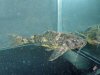 Rhinodoras armbrusteri
 |
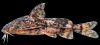 Rhinodoras armbrusteri
|
 Rhinodoras
armbrusteri Rhinodoras
armbrusteriHead view |
If you would like to contribute to the monthly factsheets with an article, information or photos, please e-mail me. You will of course be credited for your work.

If you would like to donate any denomination of monies to the site just click the above link button. All proceeds will go to running the site and hopefully to keep it going for a few years yet.

