SCOTCAT.COM  

your internet guide to all things catfish
≡
  • HOME
  • FACTSHEETS
    • By Month/Year
    • By Family
    • by Genus
    • by Common Names
    • By Specific Names
    • By Continent
      • Index
      • Africa
      • Asia
      • Australasia
      • Europe
      • North America
      • South America
  • GALLERIES
    • Photo Gallery
    • Art Gallery
    • Movie Gallery
    • Stamps Gallery
  • FAMILIES
    • A-B
      • Ailiidae
      • Akysidae
      • Amblycipitidae
      • Amphiliidae
      • Anchariidae
      • † Andinichthyidae
      • Ariidae
      • Aspredinidae
      • Astroblepidae
      • Auchenipteridae
      • Auchenoglanididae
      • Austroglanididae
      • Bagridae
    • C-D
      • Callichthyidae
      • Cetopsidae
      • Chacidae
      • Clariidae
      • Claroteidae
      • Cranoglanididae
      • Diplomystidae
      • Doradidae
    • H-I
      • Heptapteridae
      • Heteropneustidae
      • Horabagridae
      • Ictaluridae
    • K-L-M
      • Kryptoglanidae
      • Lacantuniidae
      • Loricariidae
      • Malapteruridae
      • Mochokidae
    • N-P
      • Nematogenyidae
      • Pangasiidae
      • Phreatobiidae
      • Pimelodidae
      • Plotosidae
      • Pseudopimelodidae
    • R-S-T
      • Ritidae
      • Schilbeidae
      • Scoloplacidae
      • Siluridae
      • Sisoridae
      • Trichomycteridae
  • ARTICLES
    • Index
    • Breeding
    • By Author
    • Cat-Articles
    • General
    • Numbered List
    • Ichthyology
    • Travel/Collecting
  • IDENT-A-CAT
  • RESOURCES
    • Citation
    • Etymology
    • Fishhouse
    • Glossary
    • Scientific Papers
    • ScotShop
  • SITE MAP
  • FB GROUP
  • HELP
    • Index
    • Catfish Anatomy
    • Convertors
    • FAQ
    • Ident-A-Cat
    • Water Chemistry

FACTSHEETS: August 2023 - no. 326

 Mochokus niloticus Joannis, 1835


 hen we think about the Mochokidae family our first thoughts centre on the Synodontis genus and to a lesser extent, Microsynodontis or the Chiloglanis genera but never on this months factsheet, namely the rarely imported genus of Mochokus and its two members from the East African Nilo-Sudanic distribution, M. niloticus and M. brevis. We concentrate this month on the former, which is the type genus.
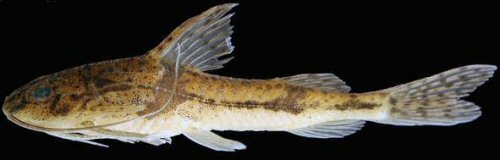
 

Mochokus niloticus

 Mochokus niloticus


It seems that M. niloticus is also found further west in the Chad drainage and in the Niger basin, including the River Bénoué in Cameroon (Seegers, L., 2008). It is strange that with such a wide distribution that this catfish has not yet found its way into the catfish hobby as it would probably be a trouble free species to keep as with the better known mochokidid, Mochokiella paynei.


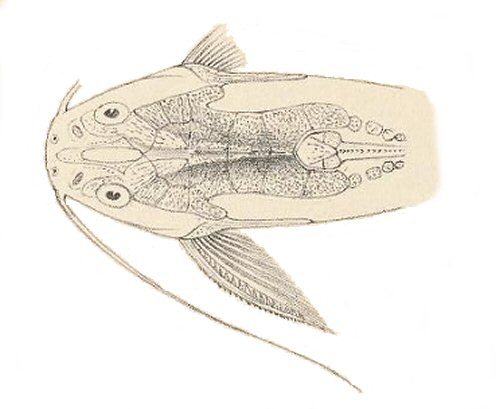
Mochokus niloticus - head view-line drawing from Boulenger (1911)

  Mochokus niloticus - head view-line drawing from Boulenger (1911)


This is a demersal, potamodromous fish found in lakes and majors rivers in shallow waters and marginal vegetation. No population estimates are available for this species, but Kenya's fisheries department believe the population is increasing in Lake Turkana. Overall, the population trend is unknown (IUCN 2020).


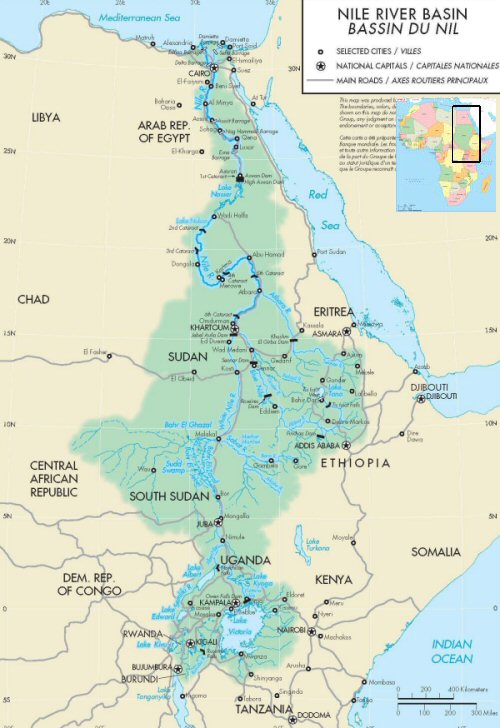
Nile River Basin


Distrbution: Nile basin. Lower Nile to Bahr-el-Gebel. Type locality: Nile River near Thebes, Egypt.


Remarks: This species has a wide distribution, with no known major widespread threats. It is therefore listed as Least Concern. It has also been assessed regionally as Least Concern for eastern, north eastern and western Africa. In north Africa, the species is assessed as Vulnerable (IUCN 2020).

There was a paper written in 2011 by Pinton, A. et al in the Journal of Vertebrate Paleontology Vol. 31, No. 1 (January 2011) of a description of a large Mochokus fossil where an abridgment of the journal article is shown below.

Abstract: The first Mochokus (Siluriformes, Mochokidae) remains of the fossil record are described, including a new species based on a sub-complete neurocranium discovered in the Late Miocene (23.03 to 5.3 million years ago) deposits of Toros-Menalla, Chad, Central Africa, dated to 7.0 Ma. Mochokus gigas, sp. nov., is the first fossil species described for the family Mochokidae, which is the largest family of African catfishes. The description is based on the comparison with the two living species of the genus, M. niloticus and M. brevis. Mochokus gigas, sp. nov., is a very large species presenting original features, notably on the pectoral spines and on the anterior part of the neurocranium. One of the apomorphies characterizing the modern genus Mochokus is found on the fossil: the root of the mesocoracoid arch is located on the posterior side of the vertical lamina of the coracoid and lacks any dorsally directed prominence. Several other Mochokus fossil remains, including nuchal plates, cleithra, and dorsal spines, are described and attributed to Mochokus, sp. indet., or Mochokus sp. Finally, and on the basis of preliminary observations of the fossil fish assemblages from different sites of Toros-Menalla, the lack of Mochokus fossil remains is discussed. More can be read on this subject in the referenced paper.


Common Name

Dwarf Nile catfish

Synonyms

Rhinoglanis typus, Rhinoglanis Vannutellii

Family

Mochokidae

Subfamily

Mochokinae

Distribution

Africa: Nile and Niger basins. Type locality: Nile River near Thebes, Egypt.

Size

6.5cm. (2½ins)

Temp.

18-28°C (63-83°F)

p.H.

6.5-7.5.

Characteristics

Dorsal spines (total): 1. Diagnosis: body elongate and slender, its depth comprised 5.4-6.3 times in standard length; head as long as broad, its dorsal surface rough; maxillary barbels non-membranous and unbranched, up to 2 times longer than head; mandibular barbels with long, simple ramifications; humeral process long, slender and pointed; 1st dorsal-fin spine weakly denticulate on anterior margin; 2nd dorsal fin with 10-13 rays; pectoral-fin spines more strongly denticulate on inner than on outer margin; caudal fin deeply forked, its lobes equally long.

Colouration

Ground colour yellowish or ochre, with brown or blackish marbled areas, largest 2 below 1st and 2nd dorsal fins respectively; fins covered with brown or black dots; 1st dorsal fin with transversally aligned spots.

Aquarium Care & Compatibility

Not much information on the keeping of this species but would probably be trouble free.

Reproduction

Oviparous. Distinct pairing during breeding.

Sexual differences

Not recorded

Diet

In its natural environment it probably feeds on mollusc and insect larvae.

Glossary of Terms

Caudal fin: The tail.
Cleithra
: A flattened pointed posterior extension of the pectoral girdle (most prominent in the genus Synodontis)
Dorsal fin
: The primary rayed fin(s) on top of the body.

Humeral process:
Bony extension of the pectoral girdle.
Lateral line:
A sensory line, along the sides of the body.
Mandibular barbels: Pertaining to the lower jaw. (mandibular barbels).
Maxillary barbels : Pertaining to the upper jaw. (maxillary barbels).
Nuchal
:
Area between the skull and dorsal fin.
Oviparous:
Describing a species that lays eggs.
Pectoral fins:
The paired fins just behind the head.

Etymology

Mochokus: Genus name of Mochokus is the latinisation of Mouchchouéké, Arabic name for M. niloticus, roughly translating as “don’t get stung or jabbed by it,” referring to its dangerously sharp spines, which local fishermen try to avoid.
niloticus
: Specific name of niloticus –icus, belonging to the Nile River near Thebes, Egypt, the type locality.

References

Ferraris, C.J. Jr., 2007. Checklist of catfishes, recent and fossil (Osteichthyes: Siluriformes), and catalogue of siluriform primary types. Zootaxa 1418:1-628.
Froese, R. and D. Pauly. Editors. 2023. FishBase. World Wide Web electronic publication. www.fishbase.org, ( 07/2023 ).
Olaosebikan, B.D., Akinyi, E., Awaïss, A., Azeroual, A., Getahun, A. & Lalèyè, P. 2020. Mochokus niloticus. The IUCN Red List of Threatened Species 2020.
Paugy, D. and T.R. Roberts, 2003. Mochokidae. p. 195-268 In C. Lévêque, D. Paugy and G.G. Teugels (eds.) Faune des poissons d'eaux douce et saumâtres de l'Afrique de l'Ouest, Tome 2. Coll. Faune et Flore tropicales 40. Musée Royal de l'Afrique Centrale, Tervuren, Belgique, Museum National d'Histoire Naturalle, Paris, France and Institut de Recherche pour le Développement, Paris, France. 815 p.
Pinton, Aurelie , Otero, Olga , Likius, Andossa , Mackaye, Hassane Taïsso , Vignaud, Patrick and Brunet, Michel (2011) 'Giants in a minute catfish genus: first description of fossil Mochokus (Siluriformes, Mochokidae) in the Late Miocene of Chad, including M. Gigas, sp. nov.', Journal of Vertebrate Paleontology, 31: 1, 22 — 31.
Seegers, L., 2008. The catfishes of Africa: A handbook for identification and maintenance. Aqualog Verlag A.C.S. GmbH, Germany. 604 p.
Waternet On the geopolitics of water scarcity © Stefan Deconinck.

Photo Credits

Tom Vigliotta @ American Museum of Natural History
©
Boulenger (1911)
Map: © Stefan Deconinck

Donate towards my web hosting bill!


If you would like to contribute to the monthly factsheets with an article, information or photos, please e-mail me. You will of course be credited for your work.

If you would like to donate any denomination of money to the site just click the above link button. All proceeds will go to running the site and hopefully to keep it going for a few years yet.


ScotCat Sources

Etymology = Genus Etymology-genus

Etymology = Specific name Etymology-specific name


Other Sources

Search  Search

FishBase Fishbase

Wikipedia Wikipedia

Catalog of Fishes Catalog of Fishes

Global Biodiversity Information Facility GBIF

FishNet2 Fishnet 2

iNaturalist iNaturalist

IUCN IUCN

Journal of Vertebrate Paleontology JSTOR

  • Facebook about us + contact us + citation + translate + site map + scotshop + glossary + etymology +
  • help YouTube

©2025 SCOTCAT.COM