SCOTCAT.COM
your internet guide to all things catfish
FACTSHEETS: November 2000 - no. 053
Pareutropius buffei (Gras, 1961) |
Pareutropius buffei
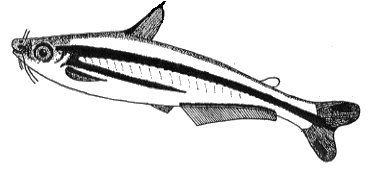
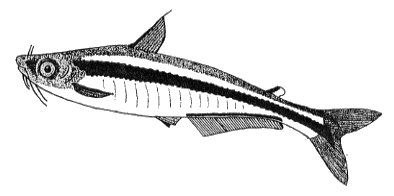
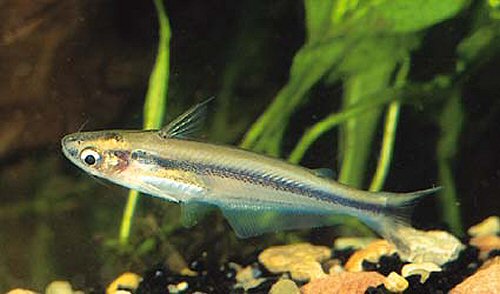
This member of the Schilbeidae family of glass catfishes has a rather mysterious past as far as the aquatic hobby is concerned.The fish we now know as P. buffei was thought not too long ago to be Eutropiellus debauwi and the common name given to it was the “Debauwi Cat” and this fish, P. buffei that is, is still labeled with this common name in the aquatic trade. At one time we knew the two fish as Eutropiellus buffei/debauwi but the genus name of Pareutropius has now been given to these two African Glass Cats. Below I have included line drawings of the two species for identification. Nine times out of ten you will have P. buffei as P. debauwi is rarely imported from the wild.
Pareutropius buffei
Pareutropius debauwi
Pareutropius buffei
Pareutropius debauwi
As mentioned earlier they are a schooling species and they swim mid to low water, head up and moving their caudal fin back and forward. They are not timid when feeding time comes around as they love their food and if you ever want to catch this fish to show at a fish show this is the ideal time to catch them as their minds are very occupied when it comes to lunch. In saying that they are not a very good show fish as they tend to sulk in a show tank and don't show themselves of to the best of their ability.
|
 egular
visitors to ScotCat and of my monthly factsheet
series will probably surmise that I like a mystery
or two and this months (Nov.2000) offering is no different,
so hold on for another bumpy ride!.
egular
visitors to ScotCat and of my monthly factsheet
series will probably surmise that I like a mystery
or two and this months (Nov.2000) offering is no different,
so hold on for another bumpy ride!.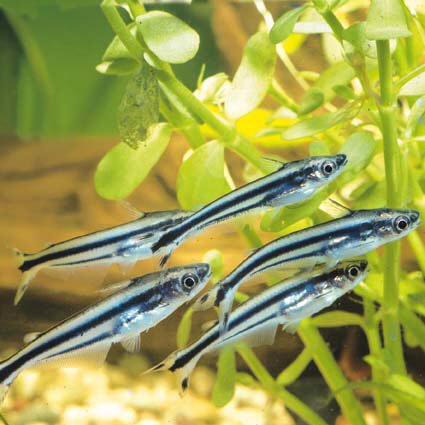
Common Name |
3-stripe glass catfish |
Synonyms |
Eutropiellus buffei, Eutropius buffei, Eutropiellus vandeweyeri |
Family |
Schilbidae |
Subfamily |
Schilbinae |
Distribution |
Asia: Lower course of the Ouémé (Benin), the Ogun (Nigeria) and the Niger. |
Size |
7.5cm. (3ins) |
Temp. |
24-27°C (75-81°F) |
p.H. |
6.0-8.0. |
Hardness |
up to 18dGH |
Characteristics |
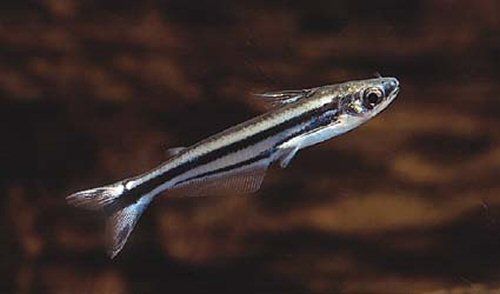
Small dorsal fin and long anal fin. Compressed body. Two midlateral body stripes, the lower one reaching the insertion of the anal fin. Two blotches on caudal fin. |
Colouration |
Body colour sivery. A dark grey/brown line along the back from snout to caudal base. A dark grey/black broad stripe extends along the lateral line continueing through to posterier edge of caudal fin. A second oblique dark stripe extends from the posterior edge of caudal fin. A second oblique dark stripe extends from the posterior border of the operculum to above the vent. A dark, sometimes elongate spot on the upper and lower lobes of the caudal fin. Base of anal fin marked with a thin dark line. The three pairs of barbels are colourless and difficult to see. |
Aquarium Care & Compatibility |
| Easy fish to keep in a shoal with non-aggressive species. |
Reproduction |
Has been bred, but only occasionally. They scatter their eggs of up to 100 amongst the plants. Remove the parents as they will eat the eggs. The eggs will hatch in three days and when they have used up their yolk sac you can feed brine shrimp and micro worm. They are a fast growing species. |
Sexual Differences |
The females of this species are usually a little bit plumper than the males. |
Diet |
| In my experience thay will eat anything but they do love frozen bloodworm and any live food such as Daphnia and Cyclops. Feed also a good quality flake food. |
Glossary of Terms |
Operculum: The bony covering of the gills of fishes. |
Etymology |
| Pareutropius:
Para = beside; eutropia = well-fed. |
IUCN Red List |
This species has a wide distribution with no known major widespread threats, and is therefore assessed as Least Concern (IUCN 2020). |
References |
Baensch,
H.A. and R. Riehl 1985 Aquarien atlas. Band
2. Mergus, Verlag für Natur- und Heimtierkunde
GmbH, Melle, Germany. 1216 p. |
Photo Credits |
© |

|

If you would like to contribute to the monthly factsheets with an article, information or photos, please e-mail me. You will of course be credited for your work.
If you would like to donate any denomination of money to the site just click the above link button. All proceeds will go to running the site and hopefully to keep it going for a few years yet.
Other Sources
 Etymology-genera
Etymology-specific
name
Online Sources
 Search
 Fishbase
 Wikipedia
 Catalog of Fishes
 GBIF
GBIF
 Fishnet2
 iNaturalist
 IUCN
IUCN

