SCOTCAT.COM
your internet guide to all things catfish
FACTSHEETS: April 2005 - no. 106
Synodontis flavitaeniatiatus Boulenger, 1919 |
Synodontis flavitaeniatiatus
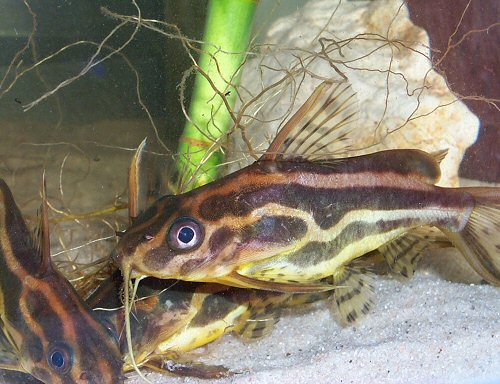
I don't apologise for revisiting Africa again, and to my mind, along with the Corydoras species from South America, the Syno's are a very special and interesting group and hopefully we will see an upsurge in interest again in these wonderful cats. We will perhaps not return to the days of the early eighties again when Synodontis like this months subject would cost you an arm and a leg and quite possibly a full weeks wages to own this beauty above. This Synodontis is only one in three species in this family that has filaments on their maxillary barbels as well as the mandibular, the other two are, S. clarias, and S. decorus.
Synodontis flavitaeniatiatus
Synodontis flavitaeniatiatus is basically an easy species to keep as it won't uproot your plants and as such can be kept in a planted aquarium. They are not aggressive so you can keep a few of them in a large community tank along with larger tetras such as the Congo Tetra from the same continent. As with all members of this family they can be territorial so must give them places to hide during the day such as rockwork, pipes or driftwood, then you will see them venturing out during the day for sorties.
The Pyjama cat is well named due to its rather garish outfit but I stress that I don't own Pyjama's of this nature :-) It also goes under another common name of the Orange Striped Squeaker owing to the colouring and the common name of "Squeakers" given to the Synodontis genus by the native people's, due to the sounds made when taken out of the water.
|
 his
months factsheet centres on one of the most beautiful
members of the Mockikidae family and perhaps maybe
the nicest looking catfish on the block!.
his
months factsheet centres on one of the most beautiful
members of the Mockikidae family and perhaps maybe
the nicest looking catfish on the block!.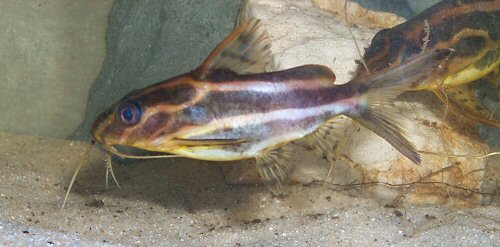
Common Name |
Pyjama Catfish |
Synonyms |
Synodontis flavitaeniatus |
Family |
Mochokidae |
Subfamily |
Mochocinae |
Distribution |
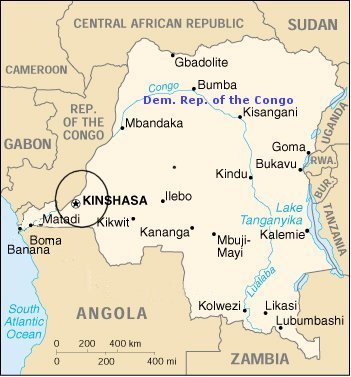
Africa: Democratic Republic of the Congo (Zaire), Kinshasa, Stanley Pool, in the upper Congo River near Brazzaville. |
Size |
15.5cm (6¼ins) |
Temp. |
23-28°C (73-83°F) |
p.H. |
6.5-7.5. |
Characteristics |
Body compressed, head slightly depressed. Three pairs of barbels. Maxillary barbels with tiny ramifications, mandibular barbels with small ramifications. Dorsal fin spine smooth anteriorly occasionally with 2 - 4 serrations at the point, strongly serrated posteriorly, ending in a short filament. Pectoral fin spine with many small serrations on the outer edge; inner edge with large serrations in the middle, decreasing in size towards each end. Caudal fin forked with the upper lobe usually being longer. |
Colouration |
The head and body are marked with wide dark sinuous horizontal brownish bands, separated by light yellowish stripes. The ventral region is lighter with small irregular blotches. Dorsal, pectoral, ventral and anal fins are marked with a transverse series of large black very contrasting spots. Adipose fin dark except for the extreme top which is lighter. Caudal fin with dark bands in both lobes where the bands in the body continue through the fin, light on the extreme edges and light in the centre except for a few black spots. |
Aquarium Care & Compatibility |
| Good community catfish in a larger setup but as with all Syno's will need their own space, meaning their own bit of bogwood, PVC pipe or rockwork to reduce the territorial behaviour of this genus. |
Reproduction |
No reports on the breeding of this species in captivity but has been hormone bred by Slovakian aquarist Petre Posel in 1994. |
Diet |
| As with most members of this genus it will eat most foods such as good quality flakefood, tablets, whiteworm, pellets and frozen food such as bloodworm. |
Etymology |
| Synodontis:
Syn = together; odontis = teeth
(fused tooth plates). |
IUCN Red List |
The species is widespread or without major threats throughout the Central Africa assessment region and is assessed as Least Concern, but does need updating (IUCN 2010). |
References |
Catfish
Association Great Britain;
Volume 1, p 111-112. |
Photo Credits |
© Julian
Dignall @ |

|

If you would like to contribute to the monthly factsheets with an article, information or photos, please e-mail me. You will of course be credited for your work.
If you would like to donate any denomination of money to the site just click the above link button. All proceeds will go to running the site and hopefully to keep it going for a few years yet.
ScotCat Sources
 Etymology-genera
Etymology-specific name
Other Sources
 Search
 Fishbase
 Wikipedia
 Catalog
of Fishes
Catalog
of Fishes
 GBIF
GBIF
 Fishnet2
 iNaturalist
 IUCN
IUCN

