SCOTCAT.COM
your internet guide to all things catfish
Brachyrhamdia thayeria Slobodian & Bockmann, 2013 |
Image contributors to this species: |
Ian Fuller (3) Brian Perkins (1) |
ScotCat Sources: |
|

Other Sources: |
|


Relevant Information: |
The common name of 'False Arched Cory' is due to its likeness (mimicking) to Corydoras arcuatus now Brochis arcuata which is now CW036 and the true Corydoras (Brochis arcuata) arcuatus, instead of the shorter nosed C020. The habit of shoaling with Corydoras species probably stems from the protection of this scaleless catfish from large predators due to the plated Corydoras where predators are wary of the locked pectoral and dorsal spines. There is the other scenario that states that the Brachyrhamdia are practising a Batesian form of shoaling whereas they take food that the Corydoras dig up from the substrate and also they steal the eggs of these species. Aquarium Care: House in aquaria (24ins/60cm or over) with alternate sand and gravel substrate. Provide planted area. Keep in a species tank or with Corydoras and larger Characins or Anabantoides in the top half as they can be predatory with small species such as Neon Tetras. Diet: Tablet and pellet foods. Frozen and live foods such as bloodworm. Insect larvae. Not a fussy eater. Etymology: The specific name thayeria: In honour of Nathaniel Thayer Jr., who sponsored Louis Agassiz on his expedition to Brazil in 1866. Remarks: The new species appears to have a mimetic association with the syntopic callichthyid Brochis arcuata. Herein, we argue in favour of the hypothesis that the interaction between species of Brachyrhamdia and Pimelodella or Corydoras is Müllerian mimicry (Slobodian, V. and F. A. Bockmann 2013). |
Common Name: |
False Arched Cory |
Synonyms: |
None |
Family: |
Heptapteridae |
Distribution: |
South America: Rio Japurá, a left margin tributary of the Rio Solimões, Amazonas basin, Brazil. |
Size: |
7.5cm. (3ins) |
Temp: |
21-25°C (69-77°F) |
p.H. |
|
6.0-7.5. |
Reference: |
Eschmeyer's Catalog
of Fishes 2020. Valid as Brachyrhamdia thayeria
Slobodian & Bockmann 2013. Heptapteridae. Distribution:
Amazon River basin: Brazil and Colombia. Habitat:
freshwater. |

Family: Heptapteridae Back to Ident-A-Cat Click on Thumbnails |
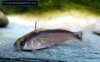 Brachyrhamdia thayeria
 |
 Brachyrhamdia
thayeria Brachyrhamdia
thayeria Group |
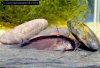 Brachyrhamdia
thayeria Brachyrhamdia
thayeria |
 Brachyrhamdia
thayeria Brachyrhamdia
thayeria |
If you would like to contribute to the monthly factsheets with an article, information or photos, please e-mail me. You will of course be credited for your work.

If you would like to donate any denomination of monies to the site just click the above link button. All proceeds will go to running the site and hopefully to keep it going for a few years yet.

