SCOTCAT.COM
your internet guide to all things catfish
Mastiglanis asopos Bockmann, 1994 |
Image contributors to this species: |
Garold W. Sneegass (1) Steven Grant (2) Danté Fenolio (3) Michael Kirkham (1) |
ScotCat Sources: |
|
|


Other Sources: |
|


Relevant Information: |
Habitat: M. asopos is a strictly sand-dwelling species. It spends the daytime buried in the top layer of sand and it forages mostly at night and sometimes in the morning. As an ambush predator, when foraging, it poises in the streamlet channel where water is flowing, supported by a tripod formed by its pelvic and anal fins, spreading both its very long barbels and the filamentous dorsal and pectoral-fin rays, thus forming a kind of "drift-trap". When the fish intercepts food, it will lunge at these food particles; after lunging for a short distance, it will return to its previous hunting spot. This behavior is similar to that seen in the tripod fish. Colouration: Overall body colour pale transparent (yellowish when in alcohol). Dorsal portion of body with seven conspicuous areas of concentrated dark chromatophores: one between head and dorsal fin (just behind nape). one in front of dorsal fin origin, one at the level of last three branched dorsal fin rays, one between dorsal and adipose fin, one just behind the adipose fin origin, one on the posterior point of adipose fin base and one on the caudal peduncle. There are also some scattered melanophores on top of head region. Aquarium Care: I keep them in a 4 ft. by 2 ft. by 18 ins. deep tank (120 x 600 x 457mm) with a sandy base with a mix of Corys, Synos, Tatia, eel tailed banjos and whiptails plus a few other cats. There is plenty of plant and wood cover in there, anubias and java moss and a few caves. They seem to hang around under the sponge fillter and don't see them in the sand very much. (M. Kirkham pers. comm.) Diet: Small trichopteran larvae (ingested with the sand cases) and ephemeropterans constituted a considerable portion of the gut contents in a study of Mastiglanis asopos, but their foraging behavior allows a varied diet which includes large chironomid larvae and small adult beetles that would not be consumed by other sand-dwelling animals. Remarks: Mastiglanis asopos has long barbels and long first pectoral fin rays which are used for feeding. It also has an acuminate (tapered to a point) snout. |
Common Name: |
None |
Synonyms: |
None |
Family: |
Heptapteridae |
Distribution: |
South America: Amazon, Capim and Orinoco River basins. Type locality: Brazil, Pará, Igarapé Saracazinho, tributary of Rio Trombetas, near Porto Trombetas. |
Size: |
6.5cm. (2¾ins) |
Temp: |
23-25°C (73-77°F) |
p.H. |
|
6.0-7.2. |
Reference: |
Ferraris, C.J. Jr.,
2007. Checklist of catfishes, recent and fossil (Osteichthyes:
Siluriformes), and catalogue of siluriform primary
types. Zootaxa 1418:1-628. |

Family: Heptapteridae Back to Ident-A-Cat Click on Thumbnails |
 Mastiglanis asopos
 |
 Mastiglanis
asopos Mastiglanis
asopos |
 Mastiglanis
asopos Mastiglanis
asopos |
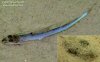 Mastiglanis
asopos Mastiglanis
asopos Loreto, Peru, September 2017. |
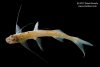 Mastiglanis
asopos Mastiglanis
asopos Loreto, Peru, September 2017 |
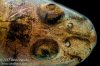 Mastiglanis
asopos Mastiglanis
asopos View of eyes-Loreto, Peru, September 2017 |
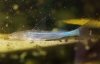 Mastiglanis
asopos Mastiglanis
asopos |
If you would like to contribute to the monthly factsheets with an article, information or photos, please e-mail me. You will of course be credited for your work.

If you would like to donate any denomination of monies to the site just click the above link button. All proceeds will go to running the site and hopefully to keep it going for a few years yet.

