SCOTCAT.COM
your internet guide to all things catfish
Pachypterus atherinoides (Bloch 1794) |
Image contributors to this species: |
Johnny Jensen's Photographic Library (2) Mostafa Hossain (2) Beta Mahatvaraj (3) Cheilinus Aquarium Photography (1) Arnob Bora (1) Muntasir Akash (1) Mahbubur Rahman Sampod (1) |
ScotCat Sources: |
|
|

Other Sources: |
|


Relevant Information: |
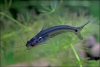
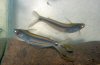
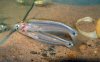
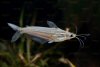
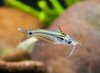
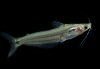
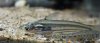
Tilak (1964) synonymised this genus under Pseudeutropius and proposed transfer of Pseudeutropius from Schilbidae to Bagridae. Mo (1991) confirmed Tilak's findings and in the light of his revision of the Bagridae including Neotropius in it. Two species previously described under Pseudeutropius have also been placed under this genus. The current status is valid as Pachypterus atherinoides and placed in the Horabagridae family. Listed in Fishbase as still in the Schilbeidae family but in Eschmeyer's Catalog of Fishes the current status is the family Horabagridae. Habitat: Inhabits freshwater and tidal rivers so does tolerate some brackish conditions. Colouration: Silvery greenish along the back with three or four bands along sides formed by black spots. A black spot on occiput and another at base of dorsal fin. Description: Body with three or four bands along the sides formed by black spots. Pectoral fins long, extending beyond pelvic fins. Anal fin with 33 to 41 rays. Reproduction: Oviparous, eggs are unguarded. Etymology: Genus name: Pachys, thick; pterus, fin, allusion not explained, perhaps referring to “considerably more lengthened” tail and/or long anal fin [often referred to as Neotropius Kulkarni 1952, a junior synonym]. Specific name: –oides, having the form of: silversides (Atherinidae: Atherina), probably referring to silvery stripe on sides. |
Common Name: |
Indian potasi |
Synonyms: |
Pseudeutropius atherinoides, Silurus atherinoides, Neotropius atherinoides |
Family: |
Horabagridae |
Distribution: |
Asia: South central Asia: Bangladesh, India, Nepal and Pakistan. Type Locality: Tranquebar. |
Size: |
11.5cm. (4¾ins) |
Temp: |
18-28°C (63-83°F) |
p.H. |
|
6.5-7.5. |
IUCN Red List |
Although there is no information on the population and its trends for Neotropius (Pachypterus) atherinoides, it is still relatively abundant throughout the Indian subcontinent. Despite the lack of understanding concerning potential threats to this species, it is assessed as Least Concern given its abundance. However, the taxonomy of this species is uncertain and what is now identified as P. atherinoides may consist of more than one species. Should this be the case, it will be necessary to reassess this species. (needs updating IUCN 2010). |
Reference: |
Froese, R. and D. Pauly.
Editors. 2014. FishBase. World Wide Web electronic
publication. www.fishbase.org, ( 08/2014 ). |

Family: Horabagridae Back to Ident-A-Cat Click on Thumbnails |
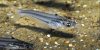 Pachypterus atherinoides
 |
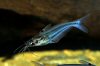 Pachypterus
atherinoides Pachypterus
atherinoides |
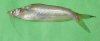 Pachypterus
atherinoides Pachypterus
atherinoidesSusong Durgapur, Netrokona, Mymensingh, Bangladesh |
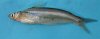 Pachypterus
atherinoides Pachypterus
atherinoidesBangladesh |
 Pachypterus
atherinoides Pachypterus
atherinoides |
 Pachypterus
atherinoides Pachypterus
atherinoides |
 Pachypterus
atherinoides Pachypterus
atherinoides |
 Pachypterus
atherinoides Pachypterus
atherinoides |
 Pachypterus
atherinoides Pachypterus
atherinoides |
 Pachypterus
atherinoides Pachypterus
atherinoides |
 Pachypterus
atherinoides Pachypterus
atherinoidesCollected from Ganges River in last monsoon. August 23, 2023 |
If you would like to contribute to the monthly factsheets with an article, information or photos, please e-mail me. You will of course be credited for your work.

If you would like to donate any denomination of monies to the site just click the above link button. All proceeds will go to running the site and hopefully to keep it going for a few years yet.

