SCOTCAT.COM
your internet guide to all things catfish
Ameiurus nebulosus (Lesueur, 1819) |
Image contributors to this species: |
Allan James (2) Frants Lehmann (2 Stamps) Reinhold Wawrzynski (7) Wolfgang Ros (2) Johnny Jensen's Photographic Library (3) |
ScotCat Sources: |
|
|


Other Sources: |
|


Relevant Information: |
Habitat: Occurs in pools and sluggish runs over soft substrates in creeks and small to large rivers. Also found in impoundments, lakes, and ponds. Rarely enters brackish waters. Aquarium Care: Bullheads adapt well to aquarium conditions but do bare in mind that they does grow big along with the capable size of its mouth! so if housing with other temperate fish you would be better going for larger stock such as yellow perch or the larger sunfishes. Putting them in with goldfish is not a good idea, not for the poor goldfish anyway!. They adapt well to most aquarium conditions as long as you give them a cave of some sort and to keep the lighting down to a minimum for viewing purposes. Diet: A nocturnal feeder that feeds mollusks, insects, leeches, crayfish and plankton, worms, algae, plant material, fishes and has been reported to feed on eggs of least cisco, herring and lake trout. Juveniles (3-6 cm) feed mostly on chironomid larvae, cladocerans, ostracods, amphipods, bugs and mayflies. Etymology: The specific name nebulosus: Clouded, dark or mottled. Remarks: Can tolerate high carbon dioxide and low oxygen concentrations and temperatures up to 31.6 °C although experiments show upper lethal temp. to be 37.5 °C; resistant to domestic and industrial pollution. Has been observed to bury itself in mud to escape adverse environmental conditions. |
Common Name: |
Brown Bullhead |
Synonyms: |
Ictalurus nebulosus marmoratus, I. nebulosus nebulosus, Amieurus vulgaris, A. lacustris, A. cactus, A. nebulosus, Pimelodus atrarius, P. cactus, P. felis, P. vulgaris, P. nebulosus, Silurus nigrescens, S. coenosus. |
Family: |
Ictaluridae |
Distribution: |
North America: Atlantic and Gulf Slope drainages from Nova Scotia and New Brunswick in Canada to Mobile Bay in Alabama in USA, and St. Lawrence- Great Lakes, Hudson Bay and Mississippi River basins from Quebec west to Saskatchewan in Canada and south to Louisiana, USA. Introduced into several countries. Several countries report adverse ecological impact after introduction. Asia: Iran and Turkey (introduced). |
Size: |
48.0cm. (19¼ins) |
Temp: |
08-30°C (45-87°F) |
p.H. |
|
6.0-7.5. |
IUCN Red List |
Listed as Least Concern in view of the large range extent, large population size, stable or increasing trend, and lack of major threats. (Needs updating IUCN 2013). |
Reference: |
Froese, R. and D. Pauly.
Editors. 2009. FishBase. World Wide Web electronic
publication. www.fishbase.org, version (04/2010). |

Family: Ictaluridae Back to Ident-A-Cat Click on Thumbnails |
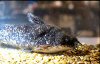 Ameiurus nebulosus
 |
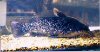 Ameiurus
nebulosus Ameiurus
nebulosus |
 Ameiurus
nebulosus Ameiurus
nebulosusStamp |
 Ameiurus
nebulosus Ameiurus
nebulosusStamp |
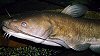 Ameiurus
nebulosus Ameiurus
nebulosus |
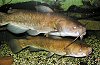 Ameiurus
nebulosus Ameiurus
nebulosusPair-female above |
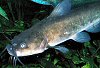 Ameiurus
nebulosus Ameiurus
nebulosus |
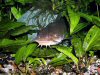 Ameiurus
nebulosus Ameiurus
nebulosus |
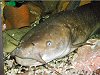 Ameiurus
nebulosus Ameiurus
nebulosus |
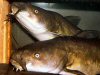 Ameiurus
nebulosus Ameiurus
nebulosus |
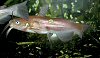 Ameiurus
nebulosus Ameiurus
nebulosusJuvenile |
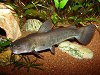 Ameiurus
nebulosus Ameiurus
nebulosus |
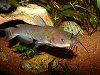 Ameiurus
nebulosus Ameiurus
nebulosus |
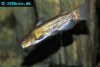 Ameiurus
nebulosus Ameiurus
nebulosus |
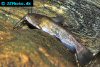 Ameiurus
nebulosus Ameiurus
nebulosus |
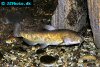 Ameiurus
nebulosus Ameiurus
nebulosus |
If you would like to contribute to the monthly factsheets with an
article, information or photos, please e-mail
me. You will of course be credited for your work.

If you would like to donate any denomination of monies to the site just click the above link button. All proceeds will go to running the site and hopefully to keep it going for a few years yet.

