SCOTCAT.COM
your internet guide to all things catfish
Noturus flavus Rafinesque, 1818 |
Image contributors to this species: |
Ohio Division of Natural Areas and Preserves (1) Birger Kamprath (4) Lawrence Kent (3) |
ScotCat Sources: |
|
|


Other Sources: |
|


Relevant Information: |
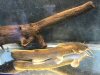
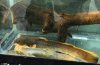
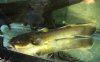
Noturus flavus is commonly called the 'Stonecat' because of its tendency to hide beneath flat rocks in fast flowing riffles and runs among stones on the river bed, where it resides in moderate to large streams. Description: The body is slender, and compressed posteriorly; the head and nape are broad and depressed; the mouth is subterminal; eye small to moderate. The pectoral spine is straight; the surface usually only roughened, and lacking prominent serrae. The genital papilla is conical and a ventral apical notch is present. The upper jaw projects beyond the lower jaw and the tooth pad on the upper jaw has a narrow, crescent-shaped extension on each side. The notch between adipose and tail fins are closer to tip of tail fin than to the dorsal fin base. The dorsal fin has 1 spine, (5)6 rays. The upper caudal rays number (27)29-33(36) and the lower caudal rays (26)27-31(33). Anal rays 15-18(19); pelvic rays (8)9-10; the pectoral has 1 spine and 9-11 rays. Habitat: Inhabits rubble and boulder riffles and runs of creeks and small to large rivers, and gravel shoals of lakes. Aquarium Care: The Madtoms are well suited to aquarium life. Provide river gravel and smooth rounded stones for hiding places during the day. A power filter at one end of the tank will provide the conditions of a flowing stream for these catfish. Can be housed with other North American fishes such as minnows, darters and shiners. Diet: Adults feed on mayfly larvae and crayfish. In the aquarium they like most meaty food, such as cut-up earth worms, frozen blood worm and prawns. They will also take tablet and pellet foods. A varied diet will keep them in optimum health. Etymology: The specific name flavus: Meaning yellow. |
Common Name: |
Stonecat |
Synonyms: |
None |
Family: |
Ictaluridae |
Distribution: |
North America: St. Lawrence-Great Lakes, Hudson Bay (Red River) and Mississippi River basins from Quebec to Alberta in Canada, and south to northern Alabama, northern Mississippi, and northeastern Oklahoma, USA; Hudson River drainage in New York, USA. |
Size: |
22.5cm. (9ins) |
Temp: |
05-23°C (37-73°F) |
p.H. |
|
6.5-7.0. |
IUCN Red List |
Listed as Least Concern in view of the large extent of occurrence, large number of subpopulations, large population size, and lack of major threats. Trend over the past ten years or three generations is uncertain but lilely relatively stable, or the species may be decling but not fast enough to qualify for any of the thretened categories under Criterion A (reduction in population size), (needs updating IUCN 2013). |
Reference: |
Etnier, D.A. and W.C.
Starnes 1993
The fishes of Tennessee. The University of Tennessee
Press, Knoxville, Tennessee, USA. |

Family: Ictaluridae Back to Ident-A-Cat Click on Thumbnails |
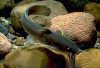 Noturus flavus
 |
 Noturus
flavus Noturus
flavusClinton River, Macomb County. Michigan USA |
 Noturus
flavus Noturus
flavusClinton River, Macomb County. Michigan USA |
 Noturus
flavus Noturus
flavusClinton River, Macomb County. Michigan USA |
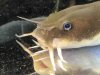 Noturus
flavus Noturus
flavusHead view - Clinton River, Macomb County. Michigan USA |
 Noturus
flavus Noturus
flavus |
 Noturus
flavus Noturus
flavus |
 Noturus
flavus Noturus
flavus |
If you would like to contribute to the monthly factsheets with an
article, information or photos, please e-mail
me. You will of course be credited for your work.

If you would like to donate any denomination of monies to the site just click the above link button. All proceeds will go to running the site and hopefully to keep it going for a few years yet.

