SCOTCAT.COM
your internet guide to all things catfish
Noturus miurus Jordan, 1877 |
Image contributors to this species: |
Matt Wagner (4) Lawrence Kent (3) |
ScotCat Sources: |
|
|


Other Sources: |
|


Relevant Information: |
Habitat: Inhabits riffles, pools below riffles and runs over gravel and sand mixed with sticks and leaves in creeks and small rivers. Also found in lakes. Inhabits mainstream rivers of small to medium size and the lower reaches of their major tributaries. Most commonly associated with moderate velocities, moderate depth (about 60 cm), clean sand or clay substrata and cover in the form of leaf packs, brush and log jams. Aquarium Care: The Madtoms are well suited to aquarium life. Provide river gravel and smooth rounded stones for hiding places during the day. A power filter at one end of the tank will provide the conditions of a flowing stream for these catfish. Can be housed with other North American fishes such as minnows, darters and shiners. Diet: Feeds on dipteran larvae (midges and blackflies), mayflies (Potamanthus and Stenonema), and hydropsychid caddisflies (Cheumatopsyche). In the aquarium they like most meaty food, such as cut-up earth worms, frozen blood worm and prawns. They will also take tablet and pellet foods. A varied diet will keep them in optimum health. Etymology: The specific name miurus: miurus meaning curtailed, probably referring to the short appearance of this fish (Noturus). |
Common Name: |
Brindled madtom, Frecklebely Madtom |
Synonyms: |
None |
Family: |
Ictaluridae |
Distribution: |
North America: lower Great Lakes drainages in Ontario, Canada and New York, USA southwest through most of Ohio River basin and lower Mississippi River basin (west to east Kansas and Oklahoma); Mohawk River in New York; Pearl River and Lake Pontchartrain drainages in Mississippi and Louisiana, USA. Type locality: Maumee River basin, lower Wabash River basin and White River near Indianapolis, Indiana [restricted to White River near Indianapolis, by lectotype designation]. |
Size: |
11.5cm. (4½ins) |
Temp: |
16-23°C (59-73°F) |
p.H. |
|
6.5-7.0. |
IUCN Red List |
Listed as Least Concern in view of the large extent of occurrence, large number of subpopulations, large population size, and lack of major threats. Trend over the past 10 years or three generations is uncertain but likely relatively stable, or the species may be declining but not fast enough to qualify for any of the threatened categories under Criterion A (reduction in population size), (needs updating IUCN 2013). |
Reference: |
Ferraris, C.J. Jr.,
2007. Checklist of catfishes, recent and fossil (Osteichthyes:
Siluriformes), and catalogue of siluriform primary
types. Zootaxa 1418:1-628. |

Family: Ictaluridae Back to Ident-A-Cat Click on Thumbnails |
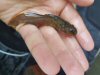 Noturus miurus
 |
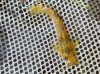 Noturus
miurus Noturus
miurusDorsal view |
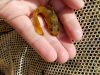 Noturus
miurus Noturus
miurus |
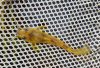 Noturus
miurus Noturus
miurusDorsal view |
 Noturus
miurus Noturus
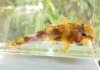
miurusFrom the Strong River Mississippi |
 Noturus
miurus Noturus
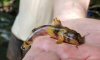
miurusMale-From the Strong River Mississippi |
 Noturus
miurus Noturus
miurusJuvenile-from the Homochito River, Mississippi |
If you would like to contribute to the monthly factsheets with an
article, information or photos, please e-mail
me. You will of course be credited for your work.

If you would like to donate any denomination of monies to the site just click the above link button. All proceeds will go to running the site and hopefully to keep it going for a few years yet.

