SCOTCAT.COM
your internet guide to all things catfish
Prietella phreatophila Carranza, 1954 |
Image contributors to this species: |
ScotCat Sources: |
|
|

Other Sources: |
|


Relevant Information: |
There are two species in this genus, P. phreatophila and P. lundbergi from the Tamesí River drainage, northeastern México. Taylor (1955, 1969) suggested that P. phreatophila is the sister group of of the large and extensive genus Noturus. Like many organisms that inhabit caves the Mexican blindcat possesses no eyes, which is compensated by the development of other senses. Studies have shown that the Mexican blindcat has acute hearing and can rapidly perceive the odour or taste of non-moving food, such as mosquito larvae. Aggressive encounters between Mexican blindcats have been observed, during which they bite at one another and then lock jaws, often remaining in mouth to mouth contact for many hours. All of the aggressive individuals appeared to be males; however, the reason behind this hostile behaviour is not yet fully understood. Mexican blindcats have also been seen resting motionless on the substrate, or drifting with currents. This behaviour would seem to leave this small fish extremely vulnerable to predation, and thus may reflect the lack of predators in their natural habitat. Description: The dorsal fin lacks a spine and the snout overhangs the mouth. The adipose fin is joined to the caudal fin without an obvious flap posteriorly. There are 15 caudal rays and 10-14 rakers on the first gill arch. The edge of the caudal fin is straight. There are well developed lateral-line canals and pores on the head. Colouration: The Mexican Blindcat lacks eyes and is pinkish white. Etymology: The specific name phreatophila: phréatos, genitive of phréar, artificial well; phila, from phílos, fond of, referring to type locality, a 2.5-m-deep well in Muzquiz, Coahuila, Mexico. |
Common Name: |
Mexican blindcat |
Synonyms: |
None |
Family: |
Ictaluridae |
Distribution: |
North America: Mexico, Caves in Bravo River basin, Coahuila, from near Múzquiz northward to about 50 km SW of Ciudad Acuña and to near Allende. Type locality: Well at base of Sierra de Santa Rosa, ca. 27º55'N, 101º07'W, Múzquiz, Coahuila state, Mexico. |
Size: |
9.0cm. T.L. (3½ins) |
Temp: |
15-23°C (57-73°F) |
p.H. |
|
6.0-7.5. |
IUCN Red List |
This species has a restricted range in subterranean systems in northern Coahuilla, Mexico, and southern Texas, USA, which gives an estimated extent of occurrence of 10,500 km2 over 14 known sites. It is thought to be declining in population and range due to the major threats of excessive aquifer depletion and pollution. The rate of population decline is unknown but may be severe, and some populations may be on the verge of extirpation. It likely has between 10 to 15 threat-based Locations, as some sites are probably hydrologically connected while others are likely undiscovered within its range. It therefore could fall into a range of Categories from Near Threatened to Endangered. As a precaution it is assessed as Vulnerable B1ab(iii), and studies of its distribution and population trends is urgently needed alongside site protection and restoration (IUCN 2019). |
Reference: |
Contreras-Balderas,
S. & Almada-Villela, P. 1996. Prietella
phreatophila. The IUCN Red List of Threatened Species.
Version 2014.3. |

Family: Ictaluridae Back to Ident-A-Cat Click on Thumbnails |
 Prietella phreatophila
 |
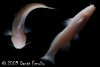 Prietella
phreatophila Prietella
phreatophila |
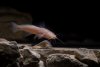 Prietella
phreatophila Prietella
phreatophila |
If you would like to contribute to the monthly factsheets with an
article, information or photos, please e-mail
me. You will of course be credited for your work.

If you would like to donate any denomination of monies to the site just click the above link button. All proceeds will go to running the site and hopefully to keep it going for a few years yet.

