SCOTCAT.COM
your internet guide to all things catfish
Ancistrus damasceni (Steindachner, 1907) |
Image contributors to this species: |
ScotCat Sources: |
|

Other Sources: |
|
|


Relevant Information: |
Aquarium Care:
The Ancistrus genera make good community
fish where they do not grow too big for the aquarium.
Some species have different requirements in the aquarium
so best to read up on the species you have whereas
if they need higher oxygen requirements or not, or
if they prefer cooler waters if they originate from
the southern parts of South America against the species
from further up north. Diet: Vegetable
foods such as cucumber and courgette and also tablet
and meaty foods. Also prefers soft wood in the diet.
Reproduction: The female lays her
eggs in caves or crevices... that the male has chosen
and cleaned.... as a cluster. The male usually then
guards the eggs after ejecting the female. The fry
then cling to the sides of the cave and when they
use up their yolk sac, which is around the four to
seven day period, they will be ready to feed on infusuria,
vegetable matter, brine shrimp naupli or micro worms.
In a community tank a few will survive if enough hiding
places are afforded to them. Etymology:
The specific name damasceni: Patronym not
identified, probably in honour of Col. José
Damasceno Nogueira, who hosted Steindachner at his
home in Filomeno, Brazil, in June 1903, near type
locality. |
Common Name: |
None |
Synonyms: |
Xenocara damasceni |
Family: |
Loricariidae |
Distribution: |
South America: Parnaíba River basin (Brazil). Type locality: dem Parnahyba bei Victoria und Sa. Filomena [Brazil]. |
Size: |
18.5cm. (7ins) |
Temp: |
24-27°c (75-81°f.) |
p.H. |
|
6.0-7.5. |
IUCN Red List |
Ancistrus damasceni is possibly endemic to the Maranhão-Piauí ecoregion, which includes the coastal basins of eastern Maranhão and the Parnaíba River basin, whose headwaters are in cerrado areas and whose middle course partially cuts through the Caatinga. The species is common, although not very abundant. Although A. damasceni occurs in an area of agricultural frontier, no significant threats that put its population at risk have been identified. For this reason, A. damasceni has been categorised as Least Concern (LC), (IUCN 2022). |
Reference: |
Ferraris, C.J. Jr.,
2007. Checklist of catfishes, recent and fossil (Osteichthyes:
Siluriformes), and catalogue of siluriform primary
types. Zootaxa 1418:1-628. |

Family: Loricariidae Back to Ident-A-Cat Click on Thumbnails |
 Ancistrus
damasceni Ancistrus
damasceni |
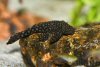 Ancistrus
damasceni Ancistrus
damasceni |
 Ancistrus
damasceni Ancistrus
damasceni |
If you would like to contribute to the monthly factsheets with an article, information or photos, please e-mail me. You will of course be credited for your work.

If you would like to donate any denomination of monies to the site just click the above link button. All proceeds will go to running the site and hopefully to keep it going for a few years yet.

