SCOTCAT.COM
your internet guide to all things catfish
Farlowella vittata Myers, 1942 |
Image contributors to this species: |
Yann Fulliquet (2) Johnny Jensen's Photographic Library (2) |
ScotCat Sources: |
|
|

Other Sources: |
|


Relevant Information: |
Aquarium Care: Although growing large this is an inoffensive fish and as such, robust tank mates should be avoided. Water parameters will need to be at the highest quality to keep this catfish in good health. Sexual Differences: When mature, males have a thicker snout and sports odontodes (hair like appendages), you can run your hand down this and feel if it is a male as females do not carry this trait, and also their snout is somewhat slimmer. Diet: Feed vegetable food such as algae, cucumber, courgette (zucchini), spinach, lettuce and peas but will also eat other foods in the aquarium. Etymology: The specific name vittata: Banded, striped. |
Common Name: |
Twig Catfish |
Synonyms: |
Farlowella agustini, Farlowella angosturae, Farlowella guaricensis, Farlowella roncallii |
Family: |
Loricariidae |
Distribution: |
Venezuela: Orinoco River basin. Type locality: tributaries of the Rio Uribanto, from San Cristobal to Ilanos, Venezuela. |
Size: |
22.5cm (9ins) |
Temp: |
24-26°c (75-79°f.) |
p.H. |
|
6.0-7.0. |
IUCN Red List |
Farlowella vittata is assessed as Least Concern based on its wide distribution, abundance and presence in various protected areas and conserved rivers. Nevertheless, in addition to human impacts in many drainages (e.g. piedmonts), it has important value in the ornamental fishing, which shows a high extraction rate from natural environments (IUCN 2021). |
Reference: |
Ferraris, C.J. Jr.,
2007. Checklist of catfishes, recent and fossil (Osteichthyes:
Siluriformes), and catalogue of siluriform primary
types. Zootaxa 1418:1-628. |

Family: Loricariidae Back to Ident-A-Cat Click on Thumbnails |
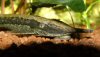 Farlowella
vittata Farlowella
vittata Head view |
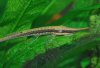 Farlowella
vittata Farlowella
vittata |
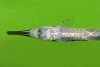 Farlowella
vittata Farlowella
vittata Ventral view |
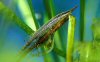 Farlowella
vittata Farlowella
vittata |
If you would like to contribute to the monthly factsheets with an article, information or photos, please e-mail me. You will of course be credited for your work.

If you would like to donate any denomination of monies to the site just click the above link button. All proceeds will go to running the site and hopefully to keep it going for a few years yet.

