SCOTCAT.COM
your internet guide to all things catfish
Harttia merevari Provenzano, Machado-Allison, Chernoff, Willink & Petry, 2005 |
Image contributors to this species: |
ScotCat Sources: |
|

Other Sources: |
|


Relevant Information: |
Description: Harttia merevari is distinguished from similar species by the presence of a naked abdomen, two or three preanal plates, a bony plate before each branchial opening, seven lateral plates between the pectoral and pelvic fins, a short maxillary barbel attached to the oral disk by a fleshy fold. Colouration: The head, dorsal surface and anterior portion of the species' body are light or dark yellow with numerous, round black spots, while the posterior region of the body is light or dark yellow with five black transverse bands, with the dorsal central area of the two anterior bands diffused. Aquarium Care: Not the easiest genera to keep as they will need clean, oxygen rich water and a strong current. Does not do well in imports due to its difficulty in traveling containers. Diet: Dry foods, algae wafers, Spirulina and normal tablet foods. Frozen foods, Artemia nauplii, glass worms and Daphnia. Sexual Differences: Males tend to have odontodes (hair like structures) on the first ray of the pectoral fins and the head in males is broader. Etymology: The genus name Harttia: –ia, belonging to: Charles Frederick Hartt (1840-1878), geologist, paleontologist and naturalist, who collect many specimens that Steindachner studied during the Thayer Expedition (1865-1866) to Brazil. The specific name of merevari: Ye-kuana name for the Caura River, Bolívar State, Venezuela, type locality. |
Common Name: |
None |
Synonyms: |
None |
Family: |
Loricariidae |
Distribution: |
South America: Upper Caura River, Orinoco River basin, Venezuela. Type locality: Venezuela, Bolívar State, Caura River at the top of Salto Pará waterfalls, among rocks on the eastern side of the river. |
Size: |
10.0cm. (4ins) |
Temp: |
25-30°c (75-87°f.) |
p.H. |
|
6.0-7.0. |
IUCN Red List |
This species is only known with certainty from the type locality, the top border of Salto Pará waterfall, upper Caura River, Orinoco River basin. More sampling in the Caura River system and other rivers of the Guiana Shield is needed to know with certainty the geographical distribution of the species. It is likely to occur in the upper Ventuari River but this requires confirmation. Data on the density, populations size and structure, and the degree of impact of threats on the habitat or distribution area are few or incomplete. Therefore, this species is assessed as Data Deficient (IUCN 2022). |
Reference: |
Ferraris,
C.J. Jr., 2007. Checklist of catfishes, recent
and fossil (Osteichthyes: Siluriformes), and catalogue
of siluriform primary types. Zootaxa 1418:1-628. |

Family: Loricariidae Back to Ident-A-Cat Click on Thumbnails |
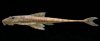 Harttia
merevari Harttia
merevariHolotype-Venezuela, Bolívar State, Caura River at the top of Salto Pará waterfalls, among rocks on the eastern side of the river |
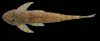 Harttia
merevari Harttia
merevariDorsal view, Holotype-Venezuela, Bolívar State, Caura River at the top of Salto Pará waterfalls, among rocks on the eastern side of the river |
 Harttia
merevari Harttia
merevariVentral view, Holotype-Venezuela, Bolívar State, Caura River at the top of Salto Pará waterfalls, among rocks on the eastern side of the river |
If you would like to contribute to the monthly factsheets with an article, information or photos, please e-mail me. You will of course be credited for your work.

If you would like to donate any denomination of monies to the site just click the above link button. All proceeds will go to running the site and hopefully to keep it going for a few years yet.

