SCOTCAT.COM
your internet guide to all things catfish
Hemiancistrus subviridis Werneke, D. C., M. H. Sabaj, N K. Lujan, and J W. Armbruster. 2005 |
Image contributors to this species: |
Danny Blundell (2) Allan James (5) Damnyankee (1) Yann Fulliquet (3) Johnny Jensen's Photographic Library (6) |
ScotCat Sources: |
|


Other Sources: |
|


Relevant Information: |
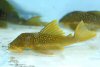
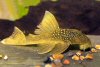
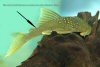
Only recently been described by the above authors (2005). Green phantom plecos are actually two species, Baryancistrus (Baryancistrus demantoides) and the other Hemiancistrus subviridis from Southern Venezuela. Description: Dorsal spines (total): 2; Dorsal soft rays (total): 7. Distinguished from all other ancistrins by colouration, lacking a connection between the dorsal and adipose fins (which B. demantoides possess) and having less than 30 teeth per jaw ramus. Found most frequently in cracks and interstitial spaces of granitic rocks in flowing water. Aquarium Care: As with the Peckoltia species they are no problem to keep and seem to be non-aggressive in a group of individuals. Should be kept in warm and soft to medium hard waters. Diet: Vegetarian with added tablet foods and fine to mediam sized live and frozen foods such as mosquito larvae and brine shrimp. Etymology: The specific name subviridis: sub(L.), less or under; viridis (L.), green, i.e., greenish, referring to olive base colour in life. |
Common Name: |
L200, Lemon Spotted Green Pleco, Green Phantom Pleco. |
Synonyms: |
None |
Family: |
Loricariidae |
Distribution: |
South America: Venezuela, Amazonas, upper Orinoco drainage. |
Size: |
25.0cm. (10ins) |
Temp: |
22-25°c (71-77°f.) |
p.H. |
|
6.5-7.2. |
IUCN Red List |
Hemiancistrus subviridis is found throughout the upper mainstem Orinoco and its major tributaries as well as the Casiquiare River. The upper Orinoco is a tremendously complex river system, so despite the fact that the species only occurs in medium to large rivers and it is widely exported for the pet trade, the habitat is so complex that it is unlikely that subpopulations of the species could be harmed. However, because they are only in rapids, exports of the species should be monitored to determine if there are any trends. Downstream subpopulations likely represent a separate species, and this species will needy to be reassessed if the downstream subpopulations can be separated. Because of its fairly large range in a complex habitat, the species is considered Least Concern (LC), (IUCN 2023). |
Reference: |
Armbruster, J.W.
2023. Hemiancistrus subviridis. The IUCN
Red List of Threatened Species 2023. |

Family: Loricariidae Back to Ident-A-Cat Click on Thumbnails |
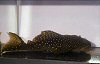 Hemiancistrus
subviridis Hemiancistrus
subviridis |
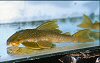 Hemiancistrus
subviridis Hemiancistrus
subviridis |
 Hemiancistrus
subviridis Hemiancistrus
subviridis |
 Hemiancistrus
subviridis Hemiancistrus
subviridis |
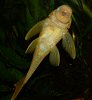 Hemiancistrus
subviridis Hemiancistrus
subviridisVentral view |
 Hemiancistrus
subviridis Hemiancistrus
subviridis |
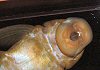 Hemiancistrus
subviridis Hemiancistrus
subviridisShowing mouth structure |
 Hemiancistrus
subviridis Hemiancistrus
subviridis |
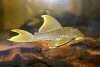 Hemiancistrus
subviridis Hemiancistrus
subviridis |
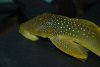 Hemiancistrus
subviridis Hemiancistrus
subviridis |
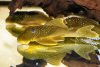 Hemiancistrus
subviridis Hemiancistrus
subviridis |
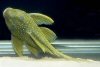 Hemiancistrus
subviridis Hemiancistrus
subviridisDorsal view |
 Hemiancistrus
subviridis Hemiancistrus
subviridis |
 Hemiancistrus
subviridis Hemiancistrus
subviridis |
 Hemiancistrus
subviridis Hemiancistrus
subviridis |
 Hemiancistrus
subviridis Hemiancistrus
subviridisNo skin fold between dorsal and adipose fins |
 Hemiancistrus
subviridis Hemiancistrus
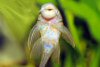
subviridisView of Mouth |
If you would like to contribute to the monthly factsheets with an article, information or photos, please e-mail me. You will of course be credited for your work.

If you would like to donate any denomination of monies to the site just click the above link button. All proceeds will go to running the site and hopefully to keep it going for a few years yet.

