SCOTCAT.COM
your internet guide to all things catfish
Baryancistrus demantoides Werneke, D. C., M. H. Sabaj, N K. Lujan, and J W. Armbruster. 2005 |
Image contributors to this species: |
Damnyankee (1) Vedran Cuncic (1) Johnny Jensen's Photographic Library (2) Allan James (2) Haakon Haagensen (1) |
ScotCat Sources: |
|

Other Sources: |
|


Relevant Information: |
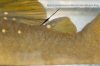
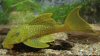
Only recently been described (2005) by the above authors. Green phantom plecos are actually two species, Baryancistrus (Baryancistrus demantoides) and the other Hemiancistrus subviridis from Southern Venezuela. Description: The main difference between these two similar looking species is that Baryancistrus has a connecting fleshy skin fold between the posterior of the dorsal fin connecting it to the fleshy adipose fin. Hemiancistrus has these two fins separate. Dorsal spines (total): 2; Dorsal soft rays (total): 7 7. Distinguished from all other ancistrins by having the dorsal and adipose fins connected by an expanded posterior section of the dorsal-fin membrane, golden-yellow spots confined to the anterior portion of the body and greater than 30 teeth per jaw ramus. Habitat: Occurs exclusively among granite rocks in flowing water. Aquarium Care: Can be problematic, especially with inexperienced aquarists, not a beginners fish. As of most of this genera the adults can be extremely territorial, especially with their own kind and other species of Baryancistrus. Prefers higher temperatures. Sexual Differences: Mature males have a broader and longer head and longer pectoral fin spines. Diet: Vegetarian diet such as cucumber and courgette will suffice with other foods offered such as frozen bloodworm, insect larvae and prawns/shrimp foods. Etymology: The specific name of demantoides, a green garnet gemstone. Remarks: Phylogenetic research since the original description has revealed that this species actually represents a new, undescribed genus largely restricted to the upper Orinoco along with Baryancistrus beggini, Hemiancistrus guahiborum and Hemiancistrus subviridis (Lujan, N. K. 2021). |
Common Name: |
L200 |
Synonyms: |
None |
Family: |
Loricariidae |
Distribution: |
Venezuela: Orinoco River at confluence with Ventuari River and lower Ventuari River. Type locality: Venezuela, Amazonas, Río Orinoco drainage, Río Ventuari near ornamental fish market in river, 04.07565º, –066.89285º. |
Size: |
20.0cm. (8ins) |
Temp: |
25-29°c (77-85°f.) |
p.H. |
|
6.0-7.5. |
IUCN Red List |
This species has an extent of occurrence (EOO) of 3,464 km2 and a known area of occupancy (AOO) of 16 km2. Considering its recent discovery in 2005, it is possible that the AOO may increase with more sampling effort in the mid to long term, but it is expected to remain relatively restricted. There is continuing decline in its habitat as a result of logging and illegal gold mining. However, there is insufficient information to count locations. Therefore, this species is assessed as Near Threatened (IUCN 2019). |
Reference: |
Echevarría,
G. 2019. Baryancistrus demantoides.
The IUCN Red List of Threatened Species 2019. |

Family: Loricariidae Back to Ident-A-Cat Click on Thumbnails |
 Baryancistrus
demantoides Baryancistrus
demantoides |
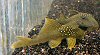 Baryancistrus
demantoides Baryancistrus
demantoides |
 Baryancistrus
demantoides Baryancistrus
demantoides |
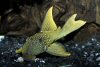 Baryancistrus
demantoides Baryancistrus
demantoides |
 Baryancistrus
demantoides Baryancistrus
demantoides |
 Baryancistrus
demantoides Baryancistrus
demantoidesShowing skin fold |
 Baryancistrus
demantoides Baryancistrus
demantoides |
If you would like to contribute to the monthly factsheets with an article, information or photos, please e-mail me. You will of course be credited for your work.

If you would like to donate any denomination of monies to the site just click the above link button. All proceeds will go to running the site and hopefully to keep it going for a few years yet.

