SCOTCAT.COM
your internet guide to all things catfish
Hypoptopoma elongatum Aquino & Schaefer, 2010 |
Image contributors to this species: |
|
Dimitris Lysikatos (1) Rupert Collins (1) |
ScotCat Sources: |
|

Other Sources: |
|
|


Relevant Information: |
This genus is recognised by the flat head and large eyes that are set latterly on the head and their heavy body armour. The ventral region is also armored and you can sometimes identify a species by the pattern on the underbelly. In saying that the species in this genus are notoriously difficult to identify and most of the time you would need the location of the catchment area or even down to the river itself to pinpoint a certain species. Description: Vertebrae: 27. This species is distinguished from its congeners by having a non-pigmented band on the head positioned parallel to the ventral margin of the rostral and lateral snout plates and with the margin between pigmented and non-pigmented plates very well defined (vs. absence of a distinct pigmented. It can be further distinguished from its congeners, except for H. inexspectatum, by having the ventral surface of the anterior rostral plate as wide as the ventral surface of the first lateral rostral plates (vs. ventral surface gradually widening from anterior rostral to lateral rostral plates). It is readily distinguished from H. inexspectatum by having a greater number of plates along the trunk medial series 23 (vs. 20-21 (21)), by having the snout appearing pointed in dorsal view due to a slight concavity between rostral plate and first infraorbital (vs. snout typically spatulate), and by having, if present, a distinct series of odontodes along dorsal and ventral rostral margin of snout restricted to the anterior rostral plate (vs. series of odontodes along dorsal and ventral rostral margin of snout extended laterally to include second and third infraorbitals). Sexual Differences: Male urogenital papilla short and conical, covered by anterior flaplike anus. Males with patch of tightly arranged small odontodes, variably covering first to fourth plates of ventral series, lateral to urogenital papilla. Males with poorly developed soft-tissue flap along posterior margin of pelvic spine. Female anus tubular, without separate urogenital papilla. In females, size and arrangement of odontodes on plates lateral to anus similar to adjacent plates, without distinct patch of differentially arranged odontodes. Female pelvic spine without flap of soft tissue on posterior surface. Aquarium Care: Will not bother other fish in the aquarium. They like to hang on to thin stalks of plants so they can see around it with their laterally located eyes. Provide shaded hiding areas in the tank with rocks or cave-like structures. Diet: Feed an all round diet but prefers a vegetable diet such as algae, spirulina tablets and cucumber/courgette. Etymology: The specific name elongatum: Named for the elongated general shape of the body, particularly marked at the tip of snout, caudal peduncle, and caudal fin. |
Common Name: |
None |
Synonyms: |
None |
Family: |
Loricariidae |
Distribution: |
South America: Lower Rio Tapajos and lower Rio Trombetas. Type locality: Rio Tapajos, Itaituba, Pará State, Brazil. |
Size: |
10.0cm. (4ins) |
Temp: |
23-27°c (73-81°f.) |
p.H. |
|
6.0-7.2. |
IUCN Red List |
Hypoptopoma elongatum is endemic to Brazil, occurring in the lower Tapajós River and the lower Trombetas River. Despite having a restricted geographic distribution, the species is relatively abundant and frequent. As no significant threats to its population have been identified, Hypoptopoma elongatum has been categorised as Least Concern (LC), (IUCN 2022). |
Reference: |
Aquino, A.E. and S.A.
Schaefer 2010
Systematics of the genus Hypoptopoma Günther,
1868 (Siluriformes, Loricariidae). Bull. Amer. Mus.
Nat. Hist. 336:1-110. |

Family: Loricariidae Back to Ident-A-Cat Click on Thumbnails |
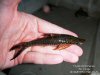 Hypoptopoma elongatum
 |
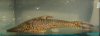 Hypoptopoma elongatum
 |
If you would like to contribute to the monthly factsheets with an article, information or photos, please e-mail me. You will of course be credited for your work.

If you would like to donate any denomination of monies to the site just click the above link button. All proceeds will go to running the site and hopefully to keep it going for a few years yet.

