SCOTCAT.COM
your internet guide to all things catfish
Hypostomus hondae (Regan, 1912) |
Image contributors to this species: |
|
Mark Henry Sabaj (1) Ictiologia Universidad Católica de Oriente (1) |
ScotCat Sources: |
|

Other Sources: |
|
|


Relevant Information: |
Placed in the Hypostoumus cochliodon species group which have a shorter body and more high backed than other members of the Hypostomus. Description: They have a small number of spatulate teeth with a single cusp with the jaws arranged in a V shape. Most Hypostomus hondae can be distinguished from all other members of the H. cochliodon group by the presence of more plates in the skin between the dorsal fin and the lateral plates anterior of the dorsal-fin spine. Some Colombian specimens do not have a large number of plates around the dorsal fin. The number of plates in this area depends on the size of the fish, some very small specimens lack plates in this region, but most small specimens have at least one or more isolated odontodes present. Hypostomus hondae is most similar to H. pagei and H. plecostomoides. Hypostomus hondae further differs from H. pagei by having spots on the caudal-fin spines (except in very melanistic specimens), by having darker colouration, a different juvenile colouration, and by having the pectoral-fin spine reach 2-3 plates beyond the pelvic fin when depressed ventral to the pelvic fin (vs. 0-1). No additional characters can distinguish H. hondae from H. plecostomoides. Sexual Differences: Males grow larger and sport longer fins. Aquarium Care: Adults are rather intolerent towards other large Loricariid catfishes. Wil give out a lot of waste in the aquarium so frequent water changes are a must. Fairly easy to keep in a larger tank over 4ft (120cm). Diet: Wood eaters so would need soft wood in the aquarium. Food tablets, pellets and vegeatable foods are also taken along with insect larvae. Etymology: The specific name hondae: From Honda in Colombia. |
Common Name: |
None |
Synonyms: |
Cochliodon pospisili, Plecostomus hondai, Cochliodon hondae |
Family: |
Loricariidae |
Distribution: |
South America: Lago Maracaibo drainage of Colombia and Venezuela, and the Río Magdalena, Río Sinú, and Río Atrato drainages of Colombia. Type locality: Honda, Colombia (300–400 ft.). |
Size: |
35.0cm. (14ins) |
Temp: |
24-27°c (75-81°f.) |
p.H. |
|
6.0-7.5. |
IUCN Red List |
Despite not being an abundant species and ongoing threats causing a slow population decline, Hypostomus hondae has a relatively wide range. Until further information becomes available therefore, this species is assessed as Least Concern (LC) category (IUCN 2023). |
Reference: |
Armbruster W. Jonathan;
2003. The species of the Hypostomus cochliodon group
(Siluriformes: Loricariidae) Zootaxa 249: 1-60 (2003). |

Family: Loricariidae Back to Ident-A-Cat Click on Thumbnails |
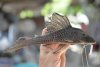 Hypostomus hondae
 |
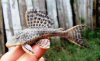 Hypostomus
hondae Hypostomus
hondae |
If you would like to contribute to the monthly factsheets with an article, information or photos, please e-mail me. You will of course be credited for your work.

If you would like to donate any denomination of monies to the site just click the above link button. All proceeds will go to running the site and hopefully to keep it going for a few years yet.

