SCOTCAT.COM
your internet guide to all things catfish
Hypostomus johnii (Steindachner, 1877) |
Image contributors to this species: |
|
Zawadzki et al (3) |
ScotCat Sources: |
|

Other Sources: |
|


Relevant Information: |
Description: Dorsal spines (total): 2; Dorsal soft rays (total): 7; Anal soft rays: 4. This species is distinguished by the following characters: high number of teeth on premaxillary (60-110) and dentary (65-115); teeth bicuspid, with asymmetric cusps; eyes small, orbital diameter 12.7-17.2% in HL and 27.8- 45.6% in interobital width; abdominal platelets more clustered on laterals of abdomen; one predorsal plate bordering supraoccipital; no hypertrophied odontodes on flanks. The Hypostomus genus has 7 rays to the dorsal fin whereas the similar looking Pterygoplichthys species have 10 dorsal fin rays. Colouration: dorsal and lateral body surfaces and fins light brown; head with very closely spaced small, dark spots; trunk with spots slightly larger than on head and forming somewhat longitudinal rows; interradial membranes of fins, except anal fin, with dark brown spots similar to those of the trunk forming 5-8 diagonal lines (from base to distal margin); anal fin light brown, spots, if present, faint and in low number; abdominal region light brown, with most individuals without spots on abdomen, some with dark brown spots irregularly scattered on entire abdomen; caudal peduncle without spots on its ventral surface. Aquarium Care: As with most of this genus, will do well in a larger aquarium, although this is one of the smaller species in the genera, and the aquarium well filtered. Water parameters can be quite diverse for this genera. Diet: Omnivore with a liking for green, tablet and frozen foods. Etymology: The specific name johnii: In honour of American geologist Orestes Saint John (1841–1921), who collected holotype during Thayer Expedition to Brazil (1865–1866). |
Common Name: |
None |
Synonyms: |
Plecostomus johnii |
Family: |
Loricariidae |
Distribution: |
South America: Brazil, Parnaíba and São Francisco River basins. Type locality: Rio Puty und Rio Preto [Brazil]. |
Size: |
11.0cm. (4½ins) |
Temp: |
24-28°c (75-83°f.) |
p.H. |
|
6.0-7.5. |
IUCN Red List |
Considering the geographic distribution recently published by Ramos et al. (2017) with specimens collected in the high, medium and low Parnaíba basin, states of Ceará, Piauí and Maranhão (Brazil), there are many aspects of the biology of this species that are unknown, including the types of threats that it might be susceptible to. Therefore, Hypostomus johnii is classified as Data Deficient until additional information becomes available (IUCN 2023). |
Reference: |
Burgess, W.E.,
1989. An atlas of freshwater and marine catfishes.
A preliminary survey of the Siluriformes. T.F.H. Publications,
Inc., Neptune City, New Jersey (USA). 784 p. |

Family: Loricariidae Back to Ident-A-Cat Click on Thumbnails |
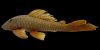 Hypostomus
johnii Hypostomus
johnii Poti River,
tributary of the Parnaíba River basin, Crateús,
Ceará, Brazil
|
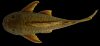 Hypostomus
johnii Hypostomus
johniiDorsal view-Poti River, tributary of the Parnaíba River basin, Crateús, Ceará, Brazil |
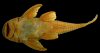 Hypostomus
johnii Hypostomus
johniiVentral view-Poti River, tributary of the Parnaíba River basin, Crateús, Ceará, Brazil |
If you would like to contribute to the monthly factsheets with an article, information or photos, please e-mail me. You will of course be credited for your work.

If you would like to donate any denomination of monies to the site just click the above link button. All proceeds will go to running the site and hopefully to keep it going for a few years yet.

