SCOTCAT.COM
your internet guide to all things catfish
Otocinclus mimulus Axenrot & Kullander, 2003 |
Image contributors to this species: |
|
Allan James (2) Mitsuhiro Iwamoto (1) Peter Hardy (1) |
ScotCat Sources: |
|

Other Sources: |
|


Relevant Information: |
Description: Vertebrae: 22 - 23. Presence of an iris diverticulum; elevated, enlarged odontodes at posterior supraoccipital tip; lateral series 24-25; lateral line canals only on first 4-6 anterior plates in median series; lateral trunk coloration variable, including either row of 4-6 distinct dark blotches or distinct dark stripe extending from pterotic posterior process to base of caudal fin, or diffuse mixture of those two colour patterns; premaxillary teeth 14-18 (commonly 15-16); mandibular teeth 12-16 (commonly 14); caudal vertebrae 15-17, modally 17; triangular pigment mark at anterior dorsal- fin base occasionally faint or absent. Habitat: O. mimulus is found in streams with dark, slightly turbid water, flowing through a landscape of mixed low forest and pasture. Collected at the margin of an open field, but the stream flowed through dense low forest left along its bank and providing shadow. Usually occurs in areas with sandy bottom, bank vegetation entering water or with marginal aquatic plants, dark, clear or slightly turbid water and limited associated fauna. Mimics Corydoras diphyes. Mimicry is unusual because the two species occupy different microhabitats and it is hypothesized to operate with a primarily visual predator moving between the microhabitats, tentatively identified as the cichlid Crenicichla lepidota. Aquarium Care: This is a small group of Loricariids which do well in aquaria and will keep the algae down without harming the plants in the tank. Best to keep in a group with more males for breeding purposes. Reproduction: The females will lay eggs on the plants and tank glass after the females have been chased around the tank by the male. Like Corydoras they present a t-position breeding mode. Diet: Omnivore: algae, tablet foods, flake and small frozen foods. Etymology: Its specific name is derived from a Latin word, mimulus, diminutive of minus, meaning actor, given with reference to the mimicry in colour pattern with Hoplisoma diphyes. |
Common Name: |
Dwarf Sucking Catfish |
Synonyms: |
None |
Family: |
Loricariidae |
Distribution: |
South America: Monday River, Paraná River basin, Paraguay. Type locality: Paraguay: Departamento Caaguazú: Río Paraná drainage, small stream (arroyo) at Estancia María Belén, 8 km from Colone Patricio Colman, 25º40'13"S, 55º5'52"W |
Size: |
3.5cm. (1½ins) |
Temp: |
22-26°c (71-79°f.) |
p.H. |
|
6.0-7.5. |
IUCN Red List |
This species is recorded from tributaries of the Río Monday, a right bank tributary of the Río Paraná in Paraguay. It has an extent of occurrence (EOO) of 4,841 km2. The distribution is located in a region of importance for the agriculture and cattle sectors, which also is impacted from two main roads or highways. There are two locations based on these threats. At present, it is unknown as to whether the threats are causing continuing declines. Therefore, it is assessed as Near Threatened (IUCN 2023). |
Reference: |
Axenrot,
T.E. and S.O. Kullander, 2003. Corydoras diphyes
(Siluriformes: Callichthyidae) and Otocinclus mimulus
(Siluriformes: Loricariidae), two new species of catfishes
from Paraguay, a case of mimetic association. Ichthyol.
Explor. Freshwat. 14(3):249-272. |

Family: Loricariidae Back to Ident-A-Cat Click on Thumbnails |
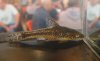 Otocinclus
mimulus Otocinclus
mimulus |
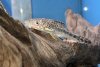 Otocinclus
mimulus Otocinclus
mimulus |
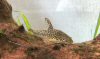 Otocinclus
mimulus Otocinclus
mimulus |
 Otocinclus
mimulus Otocinclus
mimulus |
If you would like to contribute to the monthly factsheets with an article, information or photos, please e-mail me. You will of course be credited for your work.

If you would like to donate any denomination of monies to the site just click the above link button. All proceeds will go to running the site and hopefully to keep it going for a few years yet.

