SCOTCAT.COM
your internet guide to all things catfish
Pseudancistrus corantijniensis De Chambrier & Montoya-Burgos, 2008 |
Image contributors to this species: |
Nick van Lier (2) Michael Huthart (1) |
ScotCat Sources: |
|

Other Sources: |
|
|


Relevant Information: |
Description: Dorsal spines (total): 1; Dorsal soft rays (total): 7; Anal spines: 1; Anal soft rays: 4. Pseudancistrus corantijniensis is distinguished from non-derived Pseudancistrus and other Ancistrini by the presence of hypertrophied odontodes along the snout in males as well as in females and quite early in ontogeny. Pseudancistrus corantijniensis is diagnosed from derived Pseudancistrus on the basis of colouration: whitish spots very small, crowded and faint (especially in preserved specimens) on the snout to the posterior border of the eyes and the anterior border of the cleithrum, becoming abruptly larger (at least 1 mm in diameter even in young specimens), more spaced and more visible on the posterior part of the head. Colouration: Large whitish spots continue along the body with a slight and gradual increase in size posteriorly. A single large whitish spot is generally present on each dorso-lateral plate posterior to the pelvic-fins. Pseudancistrus barbatus and P. depressus have smaller whitish spots covering the body and the spots increase slightly and gradually in size from snout to caudal peduncle rather than displaying an abrupt spot size reduction posterior to the eyes as in P. corantijniensis. In P. nigrescens, the whitish spots increase gradually in size from the snout to caudal peduncle, yet they become bigger and hazier than in the other derived Pseudancistrus. In the latter species, larger spots are often not round and can cover more than one plate. Aquarium Care: Not the easiest species to maintain in the aquarium as it will need pristine water conditions with well filtered water which should not be too hard. Warm water should be the norm. Adult males are very territorial and will not get on with other large Loricariid catfish. Sexual Differences: Males have a broad head and posses long bristles along the edge of the snout. Diet: Aufwuch grazer, mainly vegetarian, with lettuce, spinach, cucumber and courgette (zucchini), vegetarian flake and tablets. Will eat other foods also such as insect larvae, zooplankton and soft wood but will need to be kept on a mainly green diet. |
Common Name: |
None |
Synonyms: |
None |
Family: |
Loricariidae |
Distribution: |
South America: Brazil, Suriname. Known from middle and lower Corantijn River. |
Size: |
18.0cm. (7¼ins) |
Temp: |
26-30°c (79-87°f) |
p.H. |
|
6.0-7.0. |
Reference: |
|
De Chambrier, S. and
J.I. Montoya-Burgos, 2008. Pseudancistrus
corantijniensis, a new species from the Guyana Shield
(Siluriformes: Loricariidae) with a molecular and
morphological description of the Pseudancistrus barbatus
group. Zootaxa 1918:45-58. |

Family: Loricariidae Back to Ident-A-Cat Click on Thumbnails |
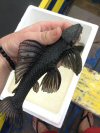 Pseudancistrus
corantijniensis Pseudancistrus
corantijniensis |
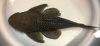 Pseudancistrus
corantijniensis Pseudancistrus
corantijniensisDorsal view |
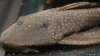 Pseudancistrus
corantijniensis Pseudancistrus
corantijniensisHead view |
If you would like to contribute to the monthly factsheets with an article, information or photos, please e-mail me. You will of course be credited for your work.

If you would like to donate any denomination of monies to the site just click the above link button. All proceeds will go to running the site and hopefully to keep it going for a few years yet.

