SCOTCAT.COM
your internet guide to all things catfish
Pseudohemiodon unillano Rojas-Molina, Provenzano & Ramírez-Gil, 2019 |
Image contributors to this species: |
Mark Henry Sabaj (1) Haakon Haagensen (1) |
ScotCat Sources: |
|

Other Sources: |
|


Relevant Information: |
Description: Broad head with mouth and lip barbels. Habitat: Pseudohemiodon unillano inhabits rivers and flooded areas at altitudes ranging from 135 to 334 m asl, in areas with gentle slope (between 0 and 3 percent) and sandy or clay substrate. In waters from high turbidity (316 mg / l total solids) to slightly clear, with pH between 6.7 and 8.6, conductivity between 117.5 and 387 µS / cm, oxygen concentration between 0.9 and 8.76 mg / l, with percentage of saturation between 20 to 83 %, and temperature between 25 and 30.7 ° C. In a sample carried out at Guayuriba River, Colombia, Pseudohemiodon unillano was captured with anostomids (Laemolyta taeniata, Leporinus striatus), apteronotids (Apteronotus galvisi, A. albifrons, Sternarchorhynchus roseni), characids (Creagrutus taphorni, Gephyrocharax valencia, Hemibrycon metae), crenuchids (Characidium boavistae), heptapterids (Cetopsorhamdia orinoco, C. shermany, Imparfinis pseudonemacheir, Phenacorhamdia anisura, P. taphorni), loricariids (Farlowella mariaelenae, Lamontichthys llanero, Chaetostoma formosae, Pterygoplichthys gibbiceps, Spatuloricaria terracanticum), (Rojas-Molina et al 2019). Aquarium Care: Requires a large aquarium with a big surface area and a sand substrate. If specimens are imported from southeastern Brazil or Paraguay they will prefer cooler temperatures in the aquarium. Prefers a sand substrate as they like to dig. Diet: Algae wafers, sinking tablet and frozen foods such as bloodworm and shrimp. Sexual Differences: Mature males will develop their lower lips to allow them to carry their eggs (abdomino-lip brooders). The very large eggs are incubated by the male. Etymology: Species name from Latin prefix 'uni' meaning one, unique, and from the Spanish word 'llano' meaning a plain terrain; alluding to the savannas or plains crossed by tributaries and the Orinoco River in Colombia and Venezuela. |
Common Name: |
None |
Synonyms: |
None |
Family: |
Loricariidae |
Distribution: |
South America: Orinoco River basin, Colombia and Venezuela. |
Size: |
30.0cm. (12ins) |
Temp: |
24-27°c (75-81°f) |
p.H. |
|
6.0-7.0. |
Reference: |
|
Froese, R. and D. Pauly.
Editors. 2023.FishBase. World Wide Web electronic
publication. www.fishbase.org, ( 06/2023 ). |

Family: Loricariidae Back to Ident-A-Cat Click on Thumbnails |
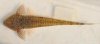 Pseudohemiodon
unillano Pseudohemiodon
unillanoDorsal view |
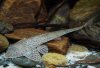 Pseudohemiodon
unillano Pseudohemiodon
unillanoColombia |
If you would like to contribute to the monthly factsheets with an article, information or photos, please e-mail me. You will of course be credited for your work.

If you would like to donate any denomination of monies to the site just click the above link button. All proceeds will go to running the site and hopefully to keep it going for a few years yet.

