SCOTCAT.COM
your internet guide to all things catfish
Rineloricaria cadeae (Hensel, 1868) |
Image contributors to this species: |
Peter Petersen (1) Kiruya Momochi (4) |
ScotCat Sources: |
|
|

Other Sources: |
|


Relevant Information: |
Description: it can be diagnosed by the following characters: elongate naked area at tip of snout reaching the most anterior pore of the infraorbital sensory canal (vs. oval naked area at tip of snout, not reaching the most anterior pore of the infraorbital sensory canal in Rineloricaria quadrensis, Rineloricaria misionera, and Rineloricaria strigilata b); plain, light brown background color (vs. with numerous dark and vermiculated spots on a light brown background in Rineloricaria strigilata); dorsal unbranched caudal-fin ray not prolonged (vs. dorsal unbranched caudal-fin ray produced as a short filament in Rineloricaria catamarcencis); usually three series of plates between the lateral abdominal plates (vs. four of five series in Rineloricaria catamarcensis and Rineloricaria felipponei); deeper body, depth at anal-fin origin 7.9-9.4% SL (vs. 6.0-7.4% SL in Rineloricaria longicauda in specimens above 10 cm SL); and comparatively larger plates covering the pectoral girdle, usually 5-6 plates transversally and usually three series of plates between the lateral abdominal plates (vs. many small plates covering the pectoral girdle, usually over 15 platelets, and four of five series of plates between the lateral abdominal plates in Rineloricaria pareiacantha and Rineloricaria thrissoceps. Habitat: Found in watercourses with slow to fast flow, clear to brown water, and rocky, sandy, or muddy bottom. Adults usually inhabit sandy bottom while young individuals prefer the leaves of marginal vegetation. It possesses the characters of the sandy group and within the species sandy group. Reproduction: The Rineloricaria species are usually cave spawners, where the female will place their eggs after the male has cleaned inside. The male will then guard and fan the eggs until hatching. The eggs will hatch in 4-5 days whereas the male can now be removed. More breeding information can be found here in the articles breeding section. Aquarium Care: As with all Rineloricaria provide long leaved plants or bamboo stalks for them to hang on to. Diet: Omnivore. Vegetable food such as cucumber and other various foods such as tablet, flake and frozen. Etymology: The specific name cadeae: Of the Rio Cadéa (also spelled Cadeia), Rio Grande do Sul, Brazil, the type locality. |
Common Name: |
None |
Synonyms: |
Loricaria cadeae |
Family: |
Loricariidae |
Distribution: |
South America: Throughout most of the Laguna dos Patos drainage, Brazil. Type locality: Rio Cadéa [Rio Grande do Sul, Brazil]. |
Size: |
12.5cm. (5ins) |
Temp: |
21-24°c (69-75°f) |
p.H. |
|
6.0-7.0. |
Reference: |
Ferraris, C.J. Jr.,
2007. Checklist of catfishes, recent and fossil (Osteichthyes:
Siluriformes), and catalogue of siluriform primary
types. Zootaxa 1418:1-628. |

Family: Loricariidae Back to Ident-A-Cat Click on Thumbnails |
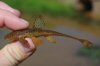 Rineloricaria
cadeae Rineloricaria
cadeaeUruguay, Cerro Largo Department |
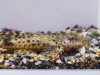 Rineloricaria
cadeae Rineloricaria
cadeae |
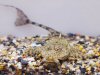 Rineloricaria
cadeae Rineloricaria
cadeaeHead view |
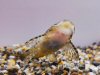 Rineloricaria
cadeae Rineloricaria
cadeaeMouth view |
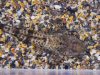 Rineloricaria
cadeae Rineloricaria
cadeaeDorsal view |
If you would like to contribute to the monthly factsheets with an article, information or photos, please e-mail me. You will of course be credited for your work.

If you would like to donate any denomination of monies to the site just click the above link button. All proceeds will go to running the site and hopefully to keep it going for a few years yet.

