SCOTCAT.COM
your internet guide to all things catfish
Sturisomatichthys festivus (Myers, 1942) |
Image contributors to this species: |
Tobias Koch (7) |
ScotCat Sources: |
|

Other Sources: |
|


Relevant Information: |
This species and Sturisomatichthys auaureus are very much alike and the care is the same for both species. The work carried out by Covain et.al. 2016 confines the Sturisoma genera to east of the Andes (cis-Andean), and the Sturisomatichthys genera restricted to the west of the Andes (trans-Andean). Reproduction: As per this genus will lay eggs usually on the tank walls and the male will guard and fan the eggs. The eggs will hatch between 7 to 9 days and the youngsters will eat Artemia, minced lettuce and mashed peas. Aquarium Care: Large planted aquarium with non aggressive tank mates. Regular water changes must be adhered to, to keep this animal in good health. Sexual Differences: Mature males will grow odontodes along the sides of the head and rostrum (snout). The males tend to have longer extensions to the fins. Diet: Mostly vegetarian with cucumber, spinach, and algae wafers. Meaty foods such as frozen blood worms and live foods such as white worms and brine shrimp can be fed sporadically. Etymology: The specific name festivus: Latin for pleasing or handsome, probably referring to its greatly prolonged fins (and perhaps also that young specimens are “very prettily marked”). Remarks: Still found in some online sources as S. festivum. |
Common Name: |
None |
Synonyms: |
Sturisoma festivum |
Family: |
Loricariidae |
Distribution: |
South America: Lake Maracaibo basin. Type locality: Río Monay, 35 km north of Trujillo, Motatan system, Maracaibo basin, Venezuela. |
Size: |
18.0cm. (7ins) |
Temp: |
24-28°c (75-83°f) |
p.H. |
|
6.0-7.0. |
IUCN Red List |
Not evaluated. |
Reference: |
|
Covain, R., S. Fisch-Muller,
C. Oliveira, J.H. Mol, J.I. Montoya-Burgos and S.
Dray, 2015. Molecular phylogeny of the highly
diversified catfish subfamily Loricariinae (Siluriformes,
Loricariidae) reveals incongruences with morphological
classification. Mol. Phylogenet. Evol. 94:492-517. |

Family: Loricariidae Back to Ident-A-Cat Click on Thumbnails |
 Sturisomatichthys
festivus Sturisomatichthys
festivusFemale |
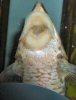 Sturisomatichthys
festivus Sturisomatichthys
festivus |
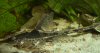 Sturisomatichthys
festivus Sturisomatichthys
festivus |
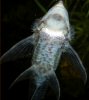 Sturisomatichthys
festivus Sturisomatichthys
festivusMale showing odonodes |
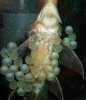 Sturisomatichthys
festivus Sturisomatichthys
festivusMale with eggs |
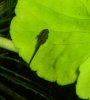 Sturisomatichthys
festivus Sturisomatichthys
festivusFry |
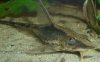 Sturisomatichthys
festivus Sturisomatichthys
festivusFemale |
If you would like to contribute to the monthly factsheets with an article, information or photos, please e-mail me. You will of course be credited for your work.

If you would like to donate any denomination of monies to the site just click the above link button. All proceeds will go to running the site and hopefully to keep it going for a few years yet.

