SCOTCAT.COM
your internet guide to all things catfish
Chiloglanis mongoensis Schmidt & Barrientos, 2019 |
Image contributors to this species: |
S. Raredon (3) |
ScotCat Sources: |
|

Other Sources: |
|
|


Relevant Information: |
Description: Dorsal spines (total): 2; Dorsal soft rays (total): 4-5; Anal spines: 0; Anal soft rays: 7 - 8. Diagnosis: Chiloglanis mongoensis is readily distinguished from all other valid species of Chiloglanis with the exception of C. marlieri and C. harbinger in possessing 28-30 mandibular teeth in one row. It is distinguished from C. marlieri in possessing a longer dorsal spine, 1.8 times into head length versus 3.1 in C. marlieri. It is distinguished from C. harbinger in having fewer premaxillary teeth, 99-116 versus 150-224, arranged in fewer rows, 4-5 versus 7; a longer dorsal spine, 9.0-9.7% of standard length versus 7.8-9.0%; a deeper body at anus, 14.0-16.0% of standard length versus 11.7-13.8%; a larger eye, 3.7-4.6% of standard length versus 2.9-3.5%; and a higher adipose fin, 2.6-3.9% of standard length versus 1.6-2.3%. Habitat: Found where the Rio Mongo was shallow, substrate mostly sand and gravel, and there was little flow. Aquarium Care: Good oxygenated water from a power filter. Sand or gravel substrate with smooth rocks or pebbles. Their dorsal and pectoral fins are sharp and can cause wounds if not handled carefully. Sexual Differences: Usually in the form of a different shaped caudal fin. Diet: Mouth and dentition suggest that it is a bottom feeder and algal grazer. In the aquarium feed algae, fly larvae foods, bloodworm, and flake food. Etymology: The specific epithet mongoensis: refers to the Rio Mongo, a tributary to the Rio Wele in Equatorial Guinea, where the species is presumed endemic. Remarks: Chiloglanis mongoensis is listed as Endangered due to a restricted extent of occurrence (EOO: 1,280 km2) and since it is only known to occur in one threat-based location. The principal threats facing this species are deforestation, road construction, and potential hydroelectric projects in the region. The small forested streams in which this species reside are particular affected by these land-use changes and the habitats are in continuing decline (IUCN 2020). |
Common Name: |
None |
Synonyms: |
None |
Family: |
Mochokidae |
Distribution: |
Africa: Rio Mongo, Equatorial Guinea. |
Size: |
3.5cm. (1½ins) |
Temp: |
23-26°C (73-79°F) |
p.H. |
|
6.5-7.2. |
Reference: |
Froese, R. and D. Pauly.
Editors. 2023. FishBase. World Wide Web electronic
publication. www.fishbase.org, ( 10/2023 ). |

Family: Mochokidae Back to Ident-A-Cat Click on Thumbnails |
 Chiloglanis
mongoensis Chiloglanis
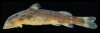
mongoensisMale, holotype, Equatorial Guinea, Centro Sur, Rio Mongo near Mosumu, 1.72809° N, 10.088° W |
 Chiloglanis
mongoensis Chiloglanis
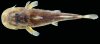
mongoensisDorsal view-male, holotype, Equatorial Guinea, Centro Sur, Rio Mongo near Mosumu, 1.72809° N, 10.088° W |
 Chiloglanis
mongoensis Chiloglanis
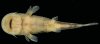
mongoensisVentral view-male, holotype, Equatorial Guinea, Centro Sur, Rio Mongo near Mosumu, 1.72809° N, 10.088° W |
If you would like to contribute to the monthly factsheets with an article, information or photos, please e-mail me. You will of course be credited for your work.

If you would like to donate any denomination of monies to the site just click the above link button. All proceeds will go to running the site and hopefully to keep it going for a few years yet.

