SCOTCAT.COM
your internet guide to all things catfish
Pimelodus atrobrunneus Vidal & Lucena, 1999 |
Image contributors to this species: |
Leandro Sousa (1) |
ScotCat Sources: |
|
|

Other Sources: |
|


Relevant Information: |
Aquarium Care: Although this species is quite rare in the hobby, water parameters are not too critical as they are quite hardy along with the other members of this genus, as long as it is not too way out of course. I do find that if the nitrate values drop the barbels will very quickly wear away, but a few water changes will have them looking their best again. If you keep your normal tank maintenance up with regular water changes (to keep the nitrates down) and good filtration ( power filters) you should have this catfish living for a good number of years. A planted aquarium can sometimes be a problem with Pimelodus as they can be quite boisterous and can dig up the plants in their night -time forays. Strong plants like Java Fern tied to bogwood or rockwork usually work out the best bet, but you can try the trial and error method with planting to find the best solution. Pimelodus atrobrunneus can of course be predatory along with most of the members of this family, so they must be kept with species larger or compatible with it such as barbs, gouramis, cichlids and other South American catfish. An aquarium 36" long would accommodate one individual but over this size you can house two or more. Give them pipes or rockwork to create their own territory to make them feel comfortable in their surroundings. Diet: Mostly live foods such as earthworms, whiteworms and frozen foods such as bloodworm and tubifex. Will also accept catfish pellets and tablet food. Etymology: The specific name atrobrunneus: atro-, from ater (L.), black; brunneus, Medieval Latin for brown, referring to grey-brown to dark-brown uniform body colouration. |
Common Name: |
None |
Synonyms: |
None |
Family: |
Pimelodidae |
Distribution: |
South America: Upper Uruguay River basin, Brazil. Type locality: Brasil: Rio Ligeiro na estrada entre Marcelino Ramos e Maximiliano de Almeida, Marcelino Ramos, 27º38'S–51º52'O, Rio Grande do Sul. |
Size: |
25.5cm. (10¼ins) TL. |
Temp: |
23-26°C (73-79°F) |
p.H. |
|
6.5-7.0. |
IUCN Red List |
Pimelodus atrobrunneus is endemic to Brazil, occurring in the middle and upper Uruguay River basin, in Rio Grande do Sul and Santa Catarina, being infrequent and not very abundant. The species is a medium-distance migrant, and there are several dams in part of its distribution. The extent of occurrence (EOO) is 45,535 km² , but as no other specific threats that endanger its population have been detected, the species has been categorised as Least Concern (LC), (IUCN 2022). |
Reference: |
Chico Mendes Institute
for Biodiversity Conservation (ICMBio). 2022.
Pimelodus atrobrunneus. The IUCN Red List
of Threatened Species 2022. |

Family: Pimelodidae Back to Ident-A-Cat Click on Thumbnails |
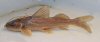 Pimelodus atrobrunneus
Holotype |
If you would like to contribute to the monthly factsheets with an article, information or photos, please e-mail me. You will of course be credited for your work.

If you would like to donate any denomination of monies to the site just click the above link button. All proceeds will go to running the site and hopefully to keep it going for a few years yet.

