SCOTCAT.COM
your internet guide to all things catfish
Cnidoglanis macrocephalus (Valenciennes 1840) |
Image contributors to this species: |
Ian V. Shaw (1) Richard Ling (1) John Turnbull (1) David Muirhead (1) |
ScotCat Sources: |
|
|

Other Sources: |
|


Relevant Information: |
Description: A large mottled brownish-yellow catfish with stout dorsal and pectoral-fin spines and five pairs barbels surrounding the mouth. Estuary catfish have large venomous dorsal and pectoral-fin spines that are capable of inflicting very painful wounds. Habitat: Endemic to temperate coastal waters of southern Australia, from Moreton Bay, Queensland, to the Abrolhos Islands (Western Australia), but absent from most of Victoria and Tasmania; occurs in Eastern Victoria (to about Lakes Entrance) and Duck River, northern Tasmania. The Estuary Cobbler inhabits marine and estuarine waters in bays and sandy or muddy inlets near river mouths. Individuals live on sandy and muddy bottoms in clear to turbid waters, often amongst rocks and algae. They also occur amongst wrack (detached seagrass and macroalgae) in the surf zone. The species is usually nocturnal, and individuals often shelter in holes and beneath rocky ledges during the day. Colouration: Variously mottled dark brown to grey, often with speckles of cream or yellow, underside of head and belly creamy. Diet: Omnivore - feeds mostly at night on fishes and benthic invertebrates including crustaceans, molluscs and polychaete worms. Individuals also consume algae and detritus. Etymology: The species is named macrocephalus for its large head: macro- (large) and cephalus (head). |
Common Name: |
Synonyms: |
Plotosus macrocephalus, Plotosus megastomus, Choeroplotosus decemfilis, Cnidoglanis bostockii, Neoplotosus waterhousii, Ostophycephalus duriceps |
Family: |
Plotosidae |
Distribution: |
Australasia: Kirra, Queensland to Jervis Bay, New South Wales, and Kingston, South Australia to Houtman Abrolhos Islands, Western Australia and Duck River, Tasmania, in near-shore and reef habitats. Type locality: prise à Timor [in error, possibly for Tasmania, Australia]. |
Size: |
91.0cm. (36½ins) |
Temp: |
- |
p.H. |
-
|
Reference: |
|
Ferraris, C.J. Jr.,
2007. Checklist of catfishes, recent and fossil (Osteichthyes:
Siluriformes), and catalogue of siluriform primary
types. Zootaxa 1418:1-628. |

Family: Plotosidae Back to Ident-A-Cat Click on Thumbnails |
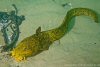 Cnidoglanis
macrocephalus Cnidoglanis
macrocephalusRed Rock Estuary, Coffs Harbour, NSW |
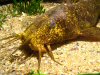 Cnidoglanis
macrocephalus Cnidoglanis
macrocephalusDorsal head view-Fairy Bower, Manly, NSW |
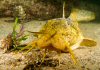 Cnidoglanis
macrocephalus Cnidoglanis
macrocephalusHead view-Shelly Beach, Manly, NSW |
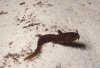 Cnidoglanis
macrocephalus Cnidoglanis
macrocephalusJuvenile-Normanville, Fleurieu Peninsula, South Australia |
If you would like to contribute to the monthly factsheets with an article, information or photos, please e-mail me. You will of course be credited for your work.

If you would like to donate any denomination of monies to the site just click the above link button. All proceeds will go to running the site and hopefully to keep it going for a few years yet.

