SCOTCAT.COM
your internet guide to all things catfish
Neosilurus manjandi Hammer, Moore, Allen, Adams, & Unmack, 2026 |
Image contributors to this species: |
ScotCat Sources: |
|
|

Other Sources: |
|

Relevant Information: |
Description: Body eel-like, moderately long and slender, laterally compressed, not tapering greatly posteriorly; minute papillae densely covering skin on head and body (development varying across individuals); first dorsal fin relatively short, its tip rounded, originating behind vertical through pelvic fin origin; pectoral fins inserted just behind opercular margin; tips of pectoral fins slightly pointed to well rounded; posterior edges of pectoral fin spines with few but large serrations on inner half; caudodorsal fin originating moderately far forward, just posterior to mid-point of body or above middle of anal fin (Hammer, M. P. et al. 2026). Habitat: Recorded in rocky stream sections including gorge and constrained valleys, in flowing stream or riffle microhabitats (dry season conditions), and likely to occupy larger refuge pools nearby. Colouration: Variable, from uniform dark brown to yellowish brown, with some speckling, and abdomen paler yellow-grey. Fins brown, but sometimes with yellowish hue, especially when freshly caught and illuminated with sunlight (Hammer, M. P. et al. 2026). Diet: The presence of relatively large teeth may be an indication of a specialised predatory diet; otherwise, all aspects of biology remain to be determined (Hammer, M. P. et al. 2026). Etymology: manjandi: The species epithet is derived from manjan di, from the language of the Ngarinyin people that literally means sandstone, in reference to the species habitat. The name was chosen in collaboration with the Nyaliga Aboriginal Corporation on whose Country the holotype specimen (type locality) of this species was collected (Hammer, M. P. et al. 2026). |
Common Name: |
Sandstone Catfish |
Synonyms: |
None |
Family: |
Plotosidae |
Distribution: |
Australia: Kimberley region of north-western Australia. |
Size: |
18.0cm. (7ins) |
Temp: |
22-28°C (71-83°F) |
p.H. |
|
6.0-8.0. |
IUCN Red List |
To place this geographic range in context referencing IUCN Red List assessment criteria, it is well less than the 5000 km2 extent of occurrence threshold of Criterion B (Geographic Distribution) for being considered Endangered (IUCN, 2024). |
Reference: |
|
Fish
in the News
2026. |

Family: Plotosidae Back to Ident-A-Cat Click on Thumbnails |
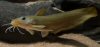 Neosilurus manjandi
Live specimen-paratype |
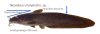 Neosilurus
manjandi Neosilurus
manjandiKey identification features-Horse Creek, Pentecost River |
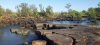 Neosilurus
manjandi Neosilurus
manjandiSandstone habitat at type locality on Nyaliga Country, small waterfall upstream of Jack’s Waterhole, Durack River, Pentecost River catchment, Australia |
If you would like to contribute to the monthly factsheets with an article, information or photos, please e-mail me. You will of course be credited for your work.

If you would like to donate any denomination of monies to the site just click the above link button. All proceeds will go to running the site and hopefully to keep it going for a few years yet.

