SCOTCAT.COM
your internet guide to all things catfish
Microglanis minutus Ottoni, Mattos & Barbosa, 2010 |
Image contributors to this species: |
ScotCat Sources: |
|

Other Sources: |
|


Relevant Information: |
|
Description: Dorsal spines (total): 1; Dorsal soft rays (total): 6; Anal soft rays: 12 - 14; Vertebrae: 28. Distinguished from all members of the Microglanis parahybae species complex by the following combination of characters: pectoral and anal fins mottled or with relatively faint bands; caudal fin emarginate; dark brown saddles on trunk; caudal peduncle with faint to dark blotch irregularly shaped; caudal fin lightly mottled with narrow vertical dark brown band across central portions of lobes; dark saddle beneath adipose fin not extending ventrally to anal fin as continuous bar; continuous portion of lateral line not reaching vertical through origin of adipose fin; tip of pectoral spine as distinct bony point; wider head; a dark blotch beneath adipose fin not extending to anal fin; distal portion of anal fin without dark band; dark saddle beneath adipose fin extending ventrally to more than the half of trunk and a light oval spot located below dorsal-fin spine (Ottoni, F.P et al 2010). Habitat: Microglanis minutus is distributed in the Barra Seca (Ottoni et al. 2010) and São Mateus (Sarmento-Soares and Martins-Pinheiro 2012) river basins, Espírito Santo, Brazil. The type locality of the species is the stream on the border of the municipalities of Jaquaré and São Mateus, Barra Seca river basin, Espírito Santo, Brazil (Ottoni et al. 2010). Aquarium Care: Microglanis minutus is one of twenty nine described species. They are small to medium sized pims, and as such are a good addition to the medium sized community tank, and will not harm the occupants unless they are small enough to fit into its mouth such as newly born fry and young fish. If you keep livebearers such as Guppies and Platies in with them you will very rarely be overrun with fry as this Bumblebee Catfish will promptly finish them off on its night time prowls. Hiding places such as rockwork, plants and or wood will benefit this species and help, along with regular water changes, to keep this it happy in its surroundings. Diet: Can be fed a varied diet of tablet food, pellets, worm foods and frozen food such as bloodworm. Etymology: The specific name minutus: Named from the Latin 'minutus', meaning small, in reference to its smaller size compared with all other congeners. |
Common Name: |
None |
Synonyms: |
None |
Family: |
Pseudopimelodidae |
Distribution: |
South America: Rio Barra Seca basin (Brazil). |
Size: |
3.0cm. (1¼ins) |
Temp: |
21-25°C (69-77°F) |
p.H. |
|
6.0-7.0. |
IUCN Red List |
Microglanis minutus occurs in the Barra Seca and São Mateus river basins, Espírito Santo. It is naturally rare and not very abundant. As no significant threats have been identified that put its population at risk, Microglanis minutus has been categorised as Least Concern (LC), (IUCN 2022). |
Reference: |
Chico Mendes Institute
for Biodiversity Conservation (ICMBio). 2022.
Microglanis minutus . The IUCN Red List of
Threatened Species 2022. |

Family: Pseudopimelodidae Back to Ident-A-Cat Click on Thumbnails |
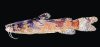 Microglanis
minutus Microglanis
minutusHolotype-Brazil, Estado do Espírito Santo, between Municípios de Jaquaré and São Mateus, rio Barra seca basin |
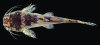 Microglanis
minutus Microglanis
minutusDorsal view, holotype-Brazil, Estado do Espírito Santo, between Municípios de Jaquaré and São Mateus, rio Barra seca basin |
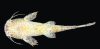 Microglanis
minutus Microglanis
minutusVentral view, holotype-Brazil, Estado do Espírito Santo, between Municípios de Jaquaré and São Mateus, rio Barra seca basin |
If you would like to contribute to the monthly factsheets with an article, information or photos, please e-mail me. You will of course be credited for your work.

If you would like to donate any denomination of monies to the site just click the above link button. All proceeds will go to running the site and hopefully to keep it going for a few years yet.
Print or e-mail this factsheet below.


