SCOTCAT.COM
your internet guide to all things catfish
Bagarius suchus Roberts, 1983 |
Image contributors to this species: |
Enrico Richter (3) Liam Irons-Mclean (3) Ben Lee (2) |
ScotCat Sources: |
|


Other Sources: |


Relevant Information: |
Description: Vertebrae: 40 - 42. Rugose dorsal surface of bony cranium and predorsal plate exposed (not covered by skin); a median sharp ridge on supraoccipital crest and paired sharp longitudinal ridges on predorsal |plate; skin on sides of head and on body with closely set beadlike or granular protuberances (resembling those of gecko skin) of similar size; body depth 7.9-9.3 (mean 8.5); a darkly pigmented spot or blotch on side of body midway between darkly pigmented bands associated with bases of dorsal and adipose fins. The skin above the neural spines anterior and posterior to the adipose fin always forms large ridges or humps (seven to nine in front of the adipose fin, three to five behind it), much more prominent and more numerous than the relatively weak humps or ridges sometimes formed over the neural spines in B. bagarius and rarely present and even more weakly developed in B. yarrelli (now a synonym of B. bagarius). In B. suchus the adipose fin origin tends to lie even further posterior than in B. bagarius (and therefore much further posteriorly than in B. yarrelli, now a synonym of B. bagarius), and the distance separating the dorsal and adipose fins is much greater in B. suchus than in B. bagarius. Habitat: The species is found in the middle and upper parts of the Chao Phraya and Mekong drainages in Thailand, Cambodia, and Lao PDR. Recorded from the Srepok River in Lao PDR; likely to be found in the upper parts of the Mekong tributaries in Viet Nam. Recorded from the Mun, Nam Songkhram and Nam Oon rivers in Thailand. Aquarium Care: The only member of the genus suitable for home aquaria. Cool, fast-flowing water required for this rapid dwelling fish. Tank should include large, smooth and rounded stones over a sandy substrate. Foods include bloodworms, shrimp and live or dead fish. Best kept alone, given its predatory nature. Will eat or dismantle most tankmates. Diet: Requiring meaty foods at all times. In the wild this fish would predate upon smaller fishes, but in an aquarium it can be persuaded to feed upon cockles, mussels, whole prawns, dead fish and earthworms. Note: Amornsakchai et al. (2000) showed that the species had declined as a result of the construction of the Pak Mun dam on the Mun River in Thailand, and considered it likely to be impacted by the construction of dams on the Mekong (MRC 2010). Assessed as 'Endangered' in Cambodia. Etymology: From soúchos (Gr.), ancient name for a crocodile, referring to how its overall appearance, and especially its teeth, are reminiscent of a crocodile (Tyson R. Roberts, pers. comm.). Remarks: As of January 2021 there are now five Bagarius species described. The "Devil Catfish" Bagarius bagarius from the Indian subcontinent. The "Dwarf Goonch" B. vegrandis is found in Chao Phraya and the Mekong. The "Flat head Goonch" B. suchus is found in Chao Phraya and the Mekong. The Giant B. lica is found in every basin except Salween. B. rutilis from Vietnam, and the undescribed species B. sp. salween which is only found in Salween and is now described as B. protos.. B. yarrelli is now a synonym of Bagarius bagarius. Update: As of June 2025 there are another two species described by Yang & Chen, B. protos (B. sp. "salween") and B. dolichonema bringing the total to seven. |
Common Name: |
Crocodile catfish, Flat Head Goonch |
Synonyms: |
None |
Family: |
Sisoridae |
Distribution: |
Asia: Mekong and Chao Phraya basins. |
Size: |
70.0cm. (2ft 4ins) |
Temp: |
18-25°c (64-77°f.) |
p.H. |
|
6.0-7.2. |
IUCN Red List |
The species is found in the middle and upper parts of the Chao Phraya and Mekong drainages in southeast Asia. It is a heavily targeted foodfish, and has been shown to be impacted by the construction of dams, and is likely to be severely impacted by planned dams within the Lower Mekong drainage. Data are not available to predict the likely scale of impact on the species' population from future dams across the species' range, however the species is assessed as Near Threatened under Criterion A (Population Reduction) on the basis that populations in part of its range are known to have declined as a result of dam construction, and likely to have declined as a result of other dams that have already been constructed (e.g. in the Chao Phraya system), and are considered likely to decline further if further dams are developed within its range. Needs updating, (IUCN 2012). |
Reference: |
Allen, D.
2012. Bagarius suchus. The IUCN Red List
of Threatened Species 2012. |

Family: Sisoridae Back to Ident-A-Cat Click on Thumbnails |
 Bagarius suchus
 |
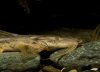 Bagarius
suchus Bagarius
suchusHead view |
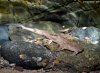 Bagarius
suchus Bagarius
suchus |
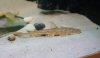 Bagarius
suchus Bagarius
suchusJuvenile |
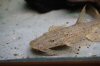 Bagarius
suchus Bagarius
suchusJuvenile head view |
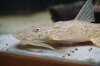 Bagarius
suchus Bagarius
suchusJuvenile closer head view |
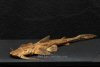 Bagarius
suchus Bagarius
suchus |
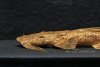 Bagarius
suchus Bagarius
suchusHead view |
If you would like to contribute to the monthly factsheets with an article, information or photos, please e-mail me. You will of course be credited for your work.

If you would like to donate any denomination of monies to the site just click the above link button. All proceeds will go to running the site and hopefully to keep it going for a few years yet.

