SCOTCAT.COM
your internet guide to all things catfish
Pseudolaguvia magna Tamang & Sinha, 2014 |
Image contributors to this species: |
Abhisek Mishra (2) |
ScotCat Sources: |

Other Sources: |


Relevant Information: |
Description: Dorsal spines (total): 1; Dorsal soft rays (total): 6; Anal soft rays: 9 - 10; Vertebrae: 27 - 29. Pseudolaguvia magna is diagnosed from all species of the genus Pseudolaguvia by the possession of the following unique characters: larger body (up to 4.7 cm SL vs. a maximum of 3.56 cm SL); mid-dorsal region with two pale-brown to cream patches (one rectangular to elliptical patch on mid-interdorsal region, and another indistinct elliptical patch in between the adipose and caudal fins); broader rhomboidal thoracic adhesive apparatus; small pale-brown to cream round spot on the ventrolateral side of the head, almost perpendicular to the eye; and absence of pale-brown to cream-coloured cross-bands on the body (which it shares with P. inornata, P. austrina, P. virgulata and P. assula). Habitat: Found in stream with clear, moderately flowing water. Occurs syntopically with Pseudolaguvia jiyaensis. Both Pseudolaguvia jiyaensis and Pseudolaguvia magna were collected along with species of Psilorhynchus, Barilius, and Danio from the same collection locality in a microhabitat consisting of small to medium-sized stones, pebbles, cobbles with light green algae, and deposits of sand particles near banks. Aquarium Care: In captivity they need cool and well oxygenated water for long term survival and they also have to be housed with peaceful tankmates. Diet: They need a good supply of live foods to keep them healthy. Etymology: Pseudolaguvia, Pseudo-, false; i.e., although this genus may superficially resemble several “closely allied” genera, including Laguvia (a junior synonym of Erethistes), such an appearance is false. The species epithet is a Latin adjective meaning ‘great’, in allusion to this being the largest of the 20 known species of Pseudolaguvia. Feminine. Remarks: The image contributor Abhisek Mishra states that the type material was originally described from lower dibang valley district in Arunachal Pradesh, India (Tamang, Lakpa & Sinha, Bikramjit, 2014). Specimens represented in the thumbnail images below however were sourced from Bengal-Assam border region from streams and rivers joining the Brahmaputra river such as Sankosh, Raidak, Chel etc. Which shows they have a wider distribution in the Brahmaputra river system. They are found alongside a variety of other sisorids in the genera Pseudolaguvia, Glyptothorax, Bagarius etc. |
Common Name: |
None |
Synonyms: |
None |
Family: |
Sisoridae |
Distribution: |
Asia: Jiya stream in Arunachal Pradesh, India. Type locality: Lower dibang valley district in Arunachal Pradesh, India. |
Size: |
5.0cm. (2ins) |
Temp: |
22-24°C (71-75°F) |
p.H. |
|
6.0-7.5. |
Reference: |
Froese, R. and D. Pauly.
Editors. 2023. FishBase. World Wide Web electronic
publication. www.fishbase.org, version (07/2023).
|

Family: Sisoridae Back to Ident-A-Cat Click on Thumbnails |
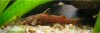 Pseudolaguvia magna
 |
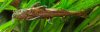 Pseudolaguvia
magna Pseudolaguvia
magna |
If you would like to contribute to the monthly factsheets with an article, information or photos, please e-mail me. You will of course be credited for your work.

If you would like to donate any denomination of monies to the site just click the above link button. All proceeds will go to running the site and hopefully to keep it going for a few years yet.

