SCOTCAT.COM
your internet guide to all things catfish
Cambeva admirabilis Costa, Feltrin, Amorim, Mattos, & Katz, 2026 |
Image contributors to this species: |
ScotCat Sources: |
|
|

Other Sources: |
|

Relevant Information: |
Description: Cambeva admirabilis differs from all other species of CBS2, except Cambeva insperata sp. nov., by the pelvic fin that is absent or rudimentary (vs. pelvic fin well-developed). Cambeva admirabilis differs from C. insperata sp. nov. by having longer barbels, with the nasal barbel reaching the opercular patch of odontodes (vs. area just posterior to orbit) and the maxillary and rictal barbels reaching area between the interopercular patch of odontodes and the pectoral-fin base (vs. reaching the anterior portion of the interopercular patch of odontodes), incisiform jaw teeth arranged in two or three regular rows (vs. jaw teeth sub-incisiform, with rounded extremity, irregularly arranged) and 38 vertebrae (vs. 39–41). Cambeva admirabilis is also distinguished from other congeners of CBS2 by having the distance between the posterior nostril and the orbital rim about equal to the distance between the anterior and posterior nostrils (vs. two times in C. insperata sp. nov. and C. intermedia sp. nov.); a colour pattern consisting of dark brown spots coalesced on the caudal peduncle side, forming a large dark zone (vs. dotted caudal peduncle side in Cambeva dominguense sp. nov., Cambeva intermedia sp. nov. and Cambeva mundana sp. nov.); the dorsal-fin origin at the vertical through the centrum of the 21st vertebra (vs. between centra of the 19th and 20th vertebrae in C. intermedia sp. nov. and through the centrum of the 23rd vertebra in C. dominguense sp. nov.); six pectoral-fin rays (vs. seven in C. intermedia sp. nov.); absence of a rounded projection on the anterior portion of the interopercular bone (vs. presence in all other species, except C. mundana sp. nov.); and presence of a U-shaped concavity in the posterior portion of the dorsal margin of the hyomandibula anterior outgrowth (vs. absence in all other species, except C. mundana sp. nov.). Habitat: Headwaters of small streams, about 700 m asl, with small pebbles and gravel on the bottom, where specimens were buried during collections. Diet: will feed on most aquarium fare such as tablet, frozen and live foods. Etymology: The genus name Cambeva: vernacular name for trichomycterids in southern and southeastern Brazil, derived from the Tupi a’kãg, head, and pewa, flat, referring dorsally flattened head. The specific name admirabilis: From the Latin admirabilis (admirable), due to the admirable, unexpected finding of this new species during the final stage of this study. |
Common Name: |
None |
Synonyms: |
None |
Family: |
Trichomycteridae |
Distribution: |
South America: Middle Rio Chapecó drainage, Rio Uruguai basin, southern Brazil. |
Size: |
5.0cm. (2ins) |
Temp: |
22-26°c (71-79°f.) |
p.H. |
|
6.0-7.0. |
IUCN Red List |
Not Evaluated. |
Reference: |
Costa, W. J. E. M.,
Feltrin, C. R. M., Amorim, P. F., Mattos, J. L. O.,
& Katz, A. M. (2026). A Riverine Species
Flock? A Remarkably High Diversity of Endemic Fossorial
Catfishes, Genus Cambeva (Siluriformes: Trichomycteridae),
in a Small Mountain Drainage of Southern Brazil. Taxonomy,
6(3), 49. |

Family: Trichomycteridae Back to Ident-A-Cat Click on Thumbnails |
 Cambeva
admirabilis Holotype-Brazil: Middle Rio Chapecó drainage, Rio Uruguai basin |
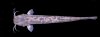 Cambeva
admirabilis Dorsal view-holotype-Brazil: Middle Rio Chapecó drainage, Rio Uruguai basin |
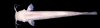 Cambeva
admirabilis Ventral view-holotype-Brazil: Middle Rio Chapecó drainage, Rio Uruguai basin |
If you would like to contribute to the monthly factsheets with an article, information or photos, please e-mail me. You will of course be credited for your work.

If you would like to donate any denomination of monies to the site just click the above link button. All proceeds will go to running the site and hopefully to keep it going for a few years yet.

