SCOTCAT.COM
your internet guide to all things catfish
Cambeva dimorphica Costa, Feltrin, Amorim, Mattos, & Katz, 2026 |
Image contributors to this species: |
ScotCat Sources: |
|
|

Other Sources: |
|

Relevant Information: |
Description: Cambeva dimorphica is distinguished from all other congeners by having two distinct flank colour patterns in adult specimens, the first one comprising irregularly shaped dark brown blotches, often coalesced to form large dark brown zones and the second one comprising small rounded dark brown spots with lighter brown centre (vs. never simultaneously having these two distinct colour patterns). Cambeva dimorphica also differs from all other species of CAC by having the dorsal-fin origin at a vertical anterior to the middle of the dorsal-fin base (vs. posterior); five pelvic-fin rays (vs. four in C. alphabelardense and pelvic fin absent in C. oncina); 9 opercular and 28–33 interopercular odontodes (vs. 6 or 7 opercular, 20 or 21 interopercular odontodes in C. alphabelardense, 7 or 8 opercular, 24–26 interopercular odontodes in C. oncina); a long lacrimal, its length about equal to sesamoid supraorbital length and mesethmoid cornua sharply pointed. Habitat: Headwaters of small brook, about 1230 m asl, with small pebbles and gravel on the bottom. Most specimens were concentrated within mats of marginal amphibious plants, whereas a few ones were found under small pebbles near marginal amphibious plants. Diet: will feed on most aquarium fare such as tablet, frozen and live foods. Etymology: The genus name Cambeva: vernacular name for trichomycterids in southern and southeastern Brazil, derived from the Tupi a’kãg, head, and pewa, flat, referring dorsally flattened head. The specific name dimorphica: From the Greek di (two) and morphe (relative to shape), referring to the two colour patterns of adult specimens. |
Common Name: |
None |
Synonyms: |
None |
Family: |
Trichomycteridae |
Distribution: |
South America: Upper Rio Chapecozinho subdrainage, Rio Chapecó drainage southern Brazil. |
Size: |
4.0cm. (1½ins) |
Temp: |
22-26°c (71-79°f.) |
p.H. |
|
6.0-7.0. |
IUCN Red List |
Not Evaluated. |
Reference: |
Costa, W. J. E. M.,
Feltrin, C. R. M., Amorim, P. F., Mattos, J. L. O.,
& Katz, A. M. (2026). A Riverine Species
Flock? A Remarkably High Diversity of Endemic Fossorial
Catfishes, Genus Cambeva (Siluriformes: Trichomycteridae),
in a Small Mountain Drainage of Southern Brazil. Taxonomy,
6(3), 49. |

Family: Trichomycteridae Back to Ident-A-Cat Click on Thumbnails |
 Cambeva dimorphica Holotype-Brazil: Estado de Santa Catarina: Município de Abelardo Luz: stream tributary of the middle Rio Chapecó, Rio Uruguai basin |
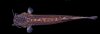 Cambeva
dimorphica Dorsal view-holotype-Brazil: Estado de Santa Catarina: Município de Abelardo Luz: stream tributary of the middle Rio Chapecó, Rio Uruguai basin |
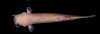 Cambeva
dimorphica Ventral view-holotype-Brazil: Estado de Santa Catarina: Município de Abelardo Luz: stream tributary of the middle Rio Chapecó, Rio Uruguai basin |
If you would like to contribute to the monthly factsheets with an article, information or photos, please e-mail me. You will of course be credited for your work.

If you would like to donate any denomination of monies to the site just click the above link button. All proceeds will go to running the site and hopefully to keep it going for a few years yet.

