SCOTCAT.COM
your internet guide to all things catfish
Paracanthopoma saci Dagosta & de Pinna, 2021 |
Image contributors to this species: |
ScotCat Sources: |
|
|

Other Sources: |
|


Relevant Information: |
This species is distinguished from Paracanthopoma parva by the following characters: a short and anteriorly-displaced opercular patch of odontodes, leaving a large posterior free area of integument continuous with the rest of the head integument around it (in dorsal view the posterior tips of the opercular odontodes do not reach the base of the pectoral fin); pelvic fin 3 (vs. 5); opercle without an ascending process (vs. with ascending process); caudal peduncle spatulate by hypertrophied series of 22?29 (upper) and 20?29 (lower) procurrent caudal-fin rays (vs. caudal peduncle narrow, with 15-19 upper and 14-18 lower rays); median premaxillary dentition feeble, with 3 delicate teeth (vs. median premaxillary dentition robust, 9 large strong teeth); supraorbital canals opening as two separate s6 pores (vs. canals fused at midline and opening as single median s6 pore); caudal fin slightly convex or truncate, with round edges (the apparent emarginated margin is a preservation artifact) (vs. bilobed or emarginate, concave); supraoccipital no anterior median process (vs. supraoccipital with produced anterior process); origins of dorsal and anal fins approximately at same vertical (vs. origin of dorsal fin clearly anterior to vertical through origin of anal fin), (Dagosta, F. & Pinna, M.de, 2021). Aquarium Care: Not easy to keep and would need to be housed on their own as larger fish would be preyed upon for their blood in the gill chambers. Sand is the best substrate for digging themselves into and floating plants to cut the light down for this light sensitive species. Diet: Very difficult as all reports seem to intimate that they need larger fish to feed on. Etymology: The genus name Paracanthopoma: pará (Gr.), near, referring to similarity to Acanthopoma (Stegophilinae), both of which possess united gill membranes that are free from the isthmus. The specific name saci: Named for the SACI expedition (South American Characiform Inventory), which collected the first known specimen of this catfish; “Appropriately, Saci is also the name of a Brazilian rural folklore supernatural entity (complete name: saci-pererê), personified as a nocturnal, one-legged, hopping, red-capped, pipe-smoking black boy, transmutable into dust devils and fond of mischievous deeds aimed at terrorising or annoying people and other animals,” presumably a nod to the fish’s hematophagous habits. |
Common Name: |
None |
Synonyms: |
None |
Family: |
Trichomycteridae |
Distribution: |
South America: Upper Rio Taquari drainage, Rio Paraguay basin, Mato Grosso do Sul, Brazil. |
Size: |
2.0cm (¾ins) |
Temp: |
23-26°c (73-79°f.) |
p.H. |
|
6.0-7.0. |
IUCN Red List |
Not evaluated |
Reference: |
Dagosta, F. & Pinna,
M.de, 2021 "Two new catfish species
of typically Amazonian lineages in the Upper Rio Paraguay
(Aspredinidae: Hoplomyzontinae and Trichomycteridae:
Vandelliinae), with a biogeographic discussion"
(Papéis Avulsos de Zoologia, Vol. 61, P. 1). |

Family: Trichomycteridae Back to Ident-A-Cat Click on Thumbnails |
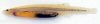 Paracanthopoma
saci Paracanthopoma
saciParotype-live specimen |
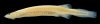 Paracanthopoma
saci Paracanthopoma
saciHolotype |
If you would like to contribute to the monthly factsheets with an article, information or photos, please e-mail me. You will of course be credited for your work.

If you would like to donate any denomination of monies to the site just click the above link button. All proceeds will go to running the site and hopefully to keep it going for a few years yet.

