SCOTCAT.COM
your internet guide to all things catfish
Akysis longifilis Ng, 2006 |
Image contributors to this species: |
| Adrian Taylor (5) Daniel Blom (2) Steven Grant (1) Heok Hee Ng (3) Johnny Jensen's Photographic Library (1) |
ScotCat Sources: |
|


Other Sources: |
|
|


Relevant Information: |
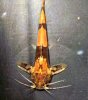
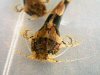
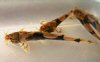
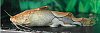
Description: Vertebrae: 33 - 35. Akysis longifilis is a member of the A. variegatus species group and can be distinguished from congeners in the group (except for A. brachybarbatus, A. fuliginatus, A. pictus, A. prashadi, A. variegatus, A. varius and A. vespa) in having a smooth (vs. serrated) posterior edge of the pectoral spine. It differs from A. brachybarbatus in having a narrower head (21.1-24.7% SL vs. 25.5-28.0) and a more slender caudal peduncle (5.6-7.2% SL vs. 7.9-8.1), and from A. fuliginatus in having a longer adipose-fin base (25.7-31.1% SL vs. 15.1-19.5), more slender body (9.7-13.6% SL vs. 14.1-16.6) and caudal peduncle (5.6-7.2% SL vs. 10.1-10.5), longer nasal and maxillary barbels (nasal barbel length 67.4-96.4% HL vs. 52.1-58.2; maxillary barbel length 123.2-159.6% HL vs.100.0-109.1), presence of light saddle-shaped spots on the body (vs. uniformly dark body), and a forked (vs. truncate) caudal fin. Akysis longifilis can be distinguished from A. pictus in having a more slender caudal peduncle (5.6-7.2% SL vs. 7.7-8.5), longer adipose-fin base (25.7-31.1% SL vs. 22.0-23.6), and longer nasal and maxillary barbels (nasal barbel length 67.4-96.4% HL vs. 54.3-56.7; maxillary barbel length 123.2-159.6% HL vs. 95.7-128.8), and from A. prashadi in having a longer caudal peduncle (18.3-23.2% SL vs. 16.5-18.4). It differs from A. variegatus in having longer nasal and maxillary barbels (nasal barbel length 67.4-96.4% HL vs. 33.3-62.3; maxillary barbel length 123.2-159.6% HL vs. 78.3-114.8), from A. varius in having a forked (vs. truncate) caudal fin, and from A. vespa in having a longer adipose-fin base (25.7-31.1% SL vs. 17.6-21.1), more slender caudal peduncle (5.6-7.2% SL vs. 7.6-8.5), longer nasal and maxillary barbels (nasal barbel length 67.4-96.4% HL vs. 54.5-72.5; maxillary barbel length 123.2-159.6% HL vs. 89.0-98.2), and more vertebrae (33-35 vs. 31-32). Aquarium Care: Akysis are easy to keep for any decent fishkeeper. You can keep in small tanks (30cm wide x 20cm high x 30cm deep) with a sand bottom, small pipes, and caves. They will either bury themselves in the sand or hide in caves and pipes. They are not usually active during the day but will spring to action and eat voraciously and crazily if food is put in the tank. Diet: They will eat bloodworm, chopped earthworms, whiteworm, daphnia, and sinking pellets (although they seem to prefer live or frozen food). Etymology: The genus name Akysis: A = without; kysis = bladder, in reference to the lack of a swimbladder. The specific name longifilis: From the Latin "longus" (long) and "filum" (filament), referring to the long barbels of this species. |
Common Name: |
None |
Synonyms: |
None |
Family: |
Akysidae |
Distribution: |
Asia: Sittang River drainage, southern Myanmar (Burma). |
Size: |
5.5cm (2¼ins) |
Temp: |
18-23°C (63-73°F) |
p.H. |
|
6.7-7.2. |
IUCN Red List |
Not Evaluated. |
Reference: |
| Ng, H. H., 2006
Akysis longifilis, a new species of catfish
(Teleostei: Akysidae) from Myanmar. Zootaxa 1150:
19–30. |

Family: Akysidae Back to Ident-A-Cat Click on Thumbnails |
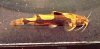 Akysis
longifilis Akysis
longifilis |
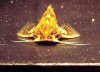 Akysis
longifilis Akysis
longifilisHead view |
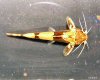 Akysis
longifilis Akysis
longifilisDorsal view |
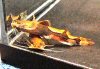 Akysis
longifilis Akysis
longifilis |
 Akysis
longifilis Akysis
longifilisDorsal view |
 Akysis
longifilis Akysis
longifilis |
 Akysis
longifilis Akysis
longifilis |
 Akysis
longifilis Akysis
longifilis |
 Akysis
longifilis Akysis
longifilis |
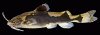 Akysis
longifilis Akysis
longifilis |
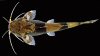 Akysis
longifilis Akysis
longifilis |
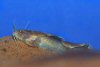 Akysis
longifilis Akysis
longifilis |
If you would like to contribute to the monthly factsheets with an article, information or photos, please e-mail me. You will of course be credited for your work.

If you would like to donate any denomination of monies to the site just click the above link button. All proceeds will go to running the site and hopefully to keep it going for a few years yet.

